A speech I gave in Danville, KY on October 14, 2023 when accepting the 2023 Distinguished Young Alumnus Award.
Mackenzie Tomlin’s introduction:
Dexter stated his dream would be to become a community organizer who could eliminate poverty – that is the type of person Dexter is. In his work as the Leadership Development Specialist with The Council of State Governments Dexter loves solving problems and working with state leaders to overcome the many challenges in our communities.
Being a Bonner Scholar at Centre College, Dexter’s commitment to helping others was evident early on. Bonner Scholars are matched with nonprofit organizations, schools, and government agencies that match their social interest. Dexter completed over 1,000 hours of community service and training, including a summer bicycling across the country to raise money and awareness for affordable housing. In addition to his volunteer work, Dexter was also a member of Phi Kappa Tau Fraternity and served as Community Service and Philanthropy Chair as well as Recruitment Chair and President of the Delta Chapter. And if all this was not enough, Dexter also served as Speaker of the House for student government, mentored students in the English as a second language program and worked for the admissions office.
After graduating from Centre College, Dexter earned his Masters of Public Administration from the University of Kentucky. Before Dexter’s position with The Council of State Governments, his career began with Ronnie Bastin for Mayor Campaign, then to a Project Manager position with the McNary Group and then served as a Development Associate with the Louisville Public Media.
Currently Dexter serves on the board of the Louisville Public Media. He has also served as Chapter Director and Recruitment Co-Chair with New Leaders Council, Vice Chair of the Community Investment Cabinet with Metro United Way, Vice President of Community and Director of Public Issues with Young Professionals Association of Louisville, and a Board Member with the Delta Chapter of Phi Kappa Tau Fraternity.
In grateful recognition of Dexter’s unwavering commitment to serve others and leadership, I am honored to recognize Dexter Horne with the 2023 Distinguished Alumnus Award.
Dexter Horne’s Remarks:
Thank you so much, Mackenzie for that introduction and thank you to the entire alumni community of Centre College for selecting me for this honor.
Also, yikes! I was telling Mackenzie over email that I was horrified to be reminded that I told the faculty and staff that my goal was to “solve poverty” when I was teenage student here. That’s insane. For those of you keeping score at home: no, I have not accomplished that yet. But, the fact that I’m up here getting the Distinguished YOUNG Alumni award and not the award for seasoned folks I think is Centre hinting to me; “there’s still time.”
So, here’s to trying. And coincidentally, that’s something that my time at Centre taught me that I carry with me every day: that there is virtue and reward in dreaming big things and doing your best to accomplish them. I’m willing to bet that you can walk around this campus now and survey the current students, asking them what they want out of their time on this planet, and – while most of them are probably smart enough to say something other than SOLVE POVERTY — almost every one of them will tell you they want something that is difficult to attain.
I loved Centre as a student, and I still love it now, because I see this as a place where young people come to be challenged, and where they leave prepared to do the difficult things our country needs and our lives demand.
Centre is where I was taught the skill of applying “healthy skepticism” to the information I’m given, and how to persevere through the discomfort of cognitive dissonance when approaching new ideas. Centre is where I was asked to do more than identify problems but try to solve them and then be held accountable for my proposed solutions.
Above all else, it was here at Centre where I was pushed to see my failures and bad decisions as part of the same grand story of progress. Centre gave me, and I think it gave most of us, the confidence to try, to fail, to learn, and to grow. That by itself is an invaluable gift.
To whom much is given, much is expected. And I do think that all of us alumni and friends of the college are expected to dream big, ambitious goals and with what we learn through failure, what we gain through working with each other, and by the opportunities time blesses us with, we are expected as adults to accomplish the lofty dreams for a better self and for a better world that we dared to dream as teenagers.
So, again, I am honored to be recognized today for where I’ve been and the things that I’ve done, but the true honor I am getting from this award is the reminder of what is expected of me and my fellow alumni in the face of all that we still must do.
I may not solve poverty, or any other huge issue that sat heavy on my heart at 18, but in the spirit of Centre and all I gained here, you can be damn-sure I’ll keep trying.
A speech I gave in Danville, KY on January 16, 2023 as part of Centre College’s annual Martin Luther King, Jr. Convocation.
Thank you for that warm introduction. Thank you, Danville. Thank you, Centre College. It’s been a long time. I’m excited to be back, and I am grateful for this opportunity to share with you my thoughts on Dr. King and what I’ve learned about community and change-making in the world outside of Centre since my time as a student.
So, let’s get into it! In my time up here I’m going to talk about three things:
First, I’m going to tell you a cautionary tale about me, and how in my last big attempt to transform an unjust system, I did not have a community mindset, and as a result…I didn’t too good.
Second, I’ll tell a few stories about Martin Luther King and show that even he needed the talents of a diverse and redemptive community to make a difference.
And finally, by the end of this, I hopefully will convince you that none of us actually needs to be great to succeed at change-making. That even Dr. King didn’t need to be great at everything to create a world that is more just than the one he inherited. By the end of my time, you will know my definition of a beloved community mindset, and why I feel that cultivating this mindset is the most useful thing that each of us can do today to make our world better during the short time we have on it.
First, it starts with me. As you heard, my name is Dexter Horne, and I was once a Centre student like many of you. I graduated from this school in 2016 and in the almost seven years since I have tried to do my version of Dr. King’s mission to make the world a more just, equitable, and inclusive place. And somehow, every day, I wake up to a world that is way worse than it was when I got here! Which is not at all what I expected from my life in 2012 when I first unlocked the door to my dorm room in Vinson Hall.
“I will study and be ready; then maybe the chance will come.”
Abraham Lincoln
Let me take you back to my mindset then. I came to Centre when the entire campus was on lockdown, not because of a global pandemic, but because this place was crawling with secret service agents as we prepared for a debate between then Vice President Joe Biden and Representative Paul Ryan. This was just a couple years after Boyle County went wet, and drinking aged students no longer had to drive to the next county to buy their Natural Lights and Burnett’s.
I personally didn’t have a Spotify account yet, and the most popular song on the radio was the main character complex theme music of every bangs-wearing manic pixy dream girl in America, a song called “Call Me Maybe” by Carly Rae Jepsen. A song which, I admit, slaps and that I still love despite the fact I that I have never been able to rock bangs myself.
Anyway, at that time, I walked onto campus with the swaggering confidence of a young millennial who knew very little about anything but was sure he could accomplish everything. And the one thing I really knew I wanted to do was that I wanted to be of service to the world. I was a Politics major and a Bonner Scholar after all, and I was sure of my ability to get things done if given the chance. I believed that all the world’s problems could easily be fixed by the learned, the driven, the charismatic…you know, folks like me!
“I will study and be ready; then maybe the chance will come.” They dropped down that Abraham Lincoln statue in front of Crounse my freshman year, and I would gaze up at it in wonder, drinking from those words inscribed in the statue’s stone base, the liquors of hope and faith: hope for a better America and faith in our ability to get there.
It wasn’t until I was in my mid-20s and out of school altogether that I learned how self-indulging and misplaced my theory on change was. Here’s what went down: I’m several years out of Centre now, I was 26 years old and overseeing all community service, political advocacy, and civic engagement work for the largest organization serving young professionals in Louisville, Kentucky. My team organized voter registration drives, hosted community service events and advocated for policies at the local and state level that we felt would make life in Louisville better for all the young adults like us in it. Overwhelmingly, my work and the work of my team was celebrated. No one in the entire city had a negative thing to say about me until the spring of 2020 when Breonna Taylor was killed.
That summer, hundreds marched past my home in the dead of night yelling, “Breonna was asleep too! No Justice, no peace.” As we masked up and marched with them, some of my peers were being tear-gassed, threatened and harassed by their own government. The deep tissue pain of being Black in America rang through every hollow corridor of society. And I and my allies on that young professional board wanted to do something about it, or at least say something about it.
Unfortunately, the more we tried to do, the more we tried to say, the more our presence made the leadership of that board uncomfortable. If we were to even utter the word “racism” something in their minds would immediately hit the panic button and attempt to shut down or divert conversation. When we suggested actions, our President would do mental gymnastics trying to find ways to disable us from moving forward then punish us for making him look like the bad guy. Those against us would talk at length about how they hated racism and how they wanted to see it eradicated from our city and in the same breath tell me that my suggestions were “too political,” or “not in our lane.”
I felt like I was screaming into the ether for help while the world below shushed me for being too loud. And instead of help, I got retaliation. The organization’s president began lashing out at anyone who spoke up for greater action. Once it was obvious that we had lost, my good friend on that board and ally in this drama, Leah Kelly, another Centre alum, asked me to “protect my peace” and know that we had done all that we could. But again, I thought my determination and intelligence were enough; so, I started lashing out right back. I pushed even harder.
At the end of the year, after fighting openly with its leadership, I ran for president of the organization so that I could have full control of its vision. Of course, after pissing off the dude with the most power on that board, I’m sure you all can guess how that went! Not only did I not win, but the current President, the white guy who blocked everything I tried to do, kicked me off the board entirely.
I can laugh about it now, but at the time I was devastated. I was frustrated with myself, with my inability to make the small corner of the world I felt like I was in control of respond in this moment of social unrest. I was afraid that I had thrown away my reputation to fight for an anti-racist future that I believed in but for which I had failed to get results. And I was surprised. I studied, and was ready, but when my time came to step up, I had been knocked down hard.
It was in the shadow of this disappointing time that I found a book by Taylor Branch called Parting the Waters: America during the King Years, 1954-1963. Despite that book being as long and dense as a dictionary, and thus something I would NOT have read were it assigned to me when I was a student here, I read the whole thing. And I read it because I was hoping to learn more about Dr. King and how he accomplished so much in a time of high racial conflict. And to be honest, I wanted to learn a little more about myself and why I had managed to accomplish so little in 2020 when racial animus was at a high point again. Here’s what I learned.
…a beloved community mindset…[is] one that allows all people to contribute to our project for a more perfect union and moves beyond ego and the politics of shame.
Dr. Martin Luther King Jr. is often heralded as a single, charismatic force that through will power and unnatural skills changed the world. That’s how I’ve always thought of him. But had he really believed that about himself, I’m sure he would have had as little success changing hearts and policy as I did on my young professionals board. The real story is much more complicated. Most of King’s deficiencies are forgotten or deemed unimportant only because he had a community of talented and passionate people around him who added their many skills to the movement so that someone else was always in position to pick up wherever he lacked. I want to give you a few examples of this.
First, I think it’s safe to say that Dr. King wasn’t the best boss. His organization, the Southern Christian Leadership Conference (or SCLC) was constantly hurt by the fact that he wasn’t very good at making sure that his operation was responsive, that the bills got paid, and that the rank and file felt valued.
Enter Stanley Levison a white, Jewish man who King considered to be one of his closest friends. Between 1957 and 1968 it is estimated that Dr. King gave around 2,500 speeches and traveled over 6 million miles to protest and march for civil rights. While King worked the microphones, Stanley Levison oversaw many of the day-to-day demands of the SCLC and professionalized its fundraising so that their movement wouldn’t go broke.
Additionally, Levison helped King draft early versions of his I Have a Dream refrain, which was famously ad-libbed during his speech at the March on Washington. Had not this friendship between a Black Christian preacher and a white Jewish attorney blossomed, it’s possible that King’s organization would have went bankrupt and one of the most famous and politically galvanizing speeches of American history would have fallen flat and been left out of our history books.
Another limitation that Dr. King had was that he was in the Black male preacher elite, and wasn’t always great at connecting with women, youth, or folks who were lower class. Fortunately, here too he had help. Ella Baker was a political activist who, along with many other Black women, did the bulk of the hard labor of the Civil Rights movement.
She had the unenviable job of organizing the SCLC’s dangerous voter registration drives in 10 states across the Jim Crow South during a time when the organization provided very few resources to the task but demanded results. She also invited arguably the most important demographic to play a more prominent role in the Civil Rights Movement: young people.
Baker encouraged the creation of the Student Nonviolent Coordinating Committee or SNCC. SNCC would go on to the support the Freedom Rides and the March on Washington and created new leaders for the movement such as John Lewis, Fannie Lou Hamer, and Stockley Carmichael.
From the pictures of young lunch-counter protestors having drinks poured down their heads to the burning freedom ride bus in Alabama, to the iconic photos of hundreds of thousands standing on the Washington Mall demanding jobs and freedom; some of the hardest fought battles of King’s movement were planned and fought by the young, the poor men, and by women of all colors and creeds. For Dr. King to become the Dr. King we celebrate today, he needed folks like Ella Baker by his side too.
King also owed his entire leadership philosophy not to himself, but to a queer, Black man. During a time of nearly unfathomable homophobia, the guiding conscious of the fight for racial equality were the thoughts and labor of a guy named Bayard Rustin. For it was Rustin who taught King the tactics of nonviolent resistance. The most pivotal moment of the era, the one stapled in our memories of Dr. Martin Luther King Jr.; was also thanks, in large part, to this leftist, radical, gay Black man. Rustin managed to organize the March on Washington in less than 60 days. Many of us in this room would have never heard Martin Luther King’s dream had it not been for the leadership and talent of a queer person.
Finally, for all the social power that Dr. King carried, he lacked the political power to get the change he wanted to see. For that, he needed to add to his community the people he had the most disagreements with: white moderates. He especially needed two important white moderates to take on personal risk and join him in his dream for a better America: John and Robert Kennedy. Just as folks like Levison, Baker, and Rustin were needed to create and sustain the Civil Rights Movement, King needed the Kennedys to turn the movement’s demands into policy.
For years, neither brother wanted to do it. President John Kennedy and Attorney General Robert Kennedy are remembered as civil rights champions, but they were not Martin Luther King’s friends, and they spent most of their time in power begrudgingly assisting him.
Their relationship with King was one filled with snubs, broken promises, and such a lack of trust that they approved an FBI wiretap on him. But in all this time, Dr. King never severed his relationship with these brothers, he never publicly eviscerated them though he had many reasons to want to. Despite the deep chasms between these leaders, King kept working with them both, believing in their quiet desire to do what was right, and remaining hopeful that they would one day join the side of justice.
And in the end, due to the persistence of the movement and its leaders, they both came to see the urgent need for civil rights legislation. Their public support for a civil rights package paved the way for President Lyndon Johnson to take up the fight after President Kennedy’s assassination. The rest, of course, is history, but only because King’s beloved community was willing to accept even its critics.
King understood that the individual cannot dismantle unjust systems, but the individual can challenge those systems wherever the two meet and encourage others to join them in that work. The individual can make their challenge stronger by choosing to display empathy and seeking mutually beneficial relations with people who desire a better world instead of seeing every encounter with someone different as zero-sum.
What Martin Luther King Jr. was brilliant at, and what Dexter Horne has not been so good at doing, is extending that empathy, that belief in redemption to those he didn’t like and to those who didn’t like him.
That superpower is at the heart of a beloved community mindset. In learning these things about Dr. King I’ve come to define that mindset as one that allows all people to contribute to our project for a more perfect union and moves beyond ego and the politics of shame.
That’s what I’ve been getting wrong on my own growth journey since my time as a bright-eyed freshman at Centre, listening to Carly Rae Jepsen, pretending to have bangs and stealing pennies from Abraham Lincoln’s feet.
To do the hardest things, we need to lead with a mindset that includes even our critics in our plans for a brighter tomorrow.
The President of that organization that booted me, I never tried to bring him into my way of thinking. I was angry with him for not getting it, for becoming afraid and rejecting my desire to fight for an organization and a world that he didn’t recognize. I made him feel like the bad guy: the privileged white boy who failed up into a leadership position in which he had proven to be woefully unprepared for. I made him feel stupid. I made him feel like a racist. I made it known that I didn’t like him.
Now, it’s also fair to say that he did all these things to himself. He shouldn’t have abused his power, he shouldn’t have been so afraid, he shouldn’t have been in that position, he shouldn’t have been acting racist. All of that is very true.
But it is also true that I, in my stubbornness, made “doing the right thing” less about finding strategic ways to build my community of people who would solve the problem, and I instead made it more about us vs. them; those fighting for equity, and those fighting against it. It wasn’t enough for me to want change, I also wanted to be vindicated for the hurt that I was feeling. Which is natural. Which is so so human. But, it’s also the opposite of acting out of a beloved community mindset fit to actually change unjust systems.
Who knows if I would have succeeded in making that volunteer board take a firmer stance against racism had I let that one, white moderate in on my vision or had I the patience to massage his fears and find compromise. Certainly though, I would not have been ousted, and would have gotten more done in the long run had I not made him my enemy from the start. That’s the lesson.
My generation, the millennials, and Generation Z, is very good at seeing the value of people who differ from us. I think we too have the skill to bring the white Jewish man, the Black woman and the queer person together to create robust and lasting solutions to our problems.
Where we might improve is in learning how to expand our community so that even the conservative white man, the politically moderate lesbian, the capitalist-minded Latin American also see our push for justice as something in which they can contribute instead of only portraying them as villains against progress. To do the hardest things, we need to lead with a mindset that includes even our critics in our plans for a brighter tomorrow.
A community mindset does just that because it is equal parts inclusive and redemptive. With it, Dr. King helped inspire a movement that crossed race, gender, sexuality, religion, ideology and class that won Black Americans the freedom to do once impossible things.
Which brings me to my final point: at the end of the day, like Dr. King, none of us in this room needs to be individually great or exceptional to make our world more just. If the communities we cultivate are great enough to hold difference, to hold people accountable for their actions, and hold opportunities for growth and redemption; we can accomplish anything. And I do mean anything.
The strength of humankind has always been, and will always be, in our cooperation. We will win the tests of the 21st century together. We will heal the heavens whose ozone layer we depleted so that again the skies are places we turn to to see the face of faith instead of fear. We will force our governments to respect the cries of the rising seas and slow the doomsday clock which ticks with the sound of cracking ice shelves.
We will question our gods, the free-market forces that have made our country unsustainably inequitable and conceive of a new economic religion that centers the health of humanity over the gluttony of private wealth.
We will unsubscribe from patriarchy, and redefine manhood, so that masculinity is no longer defined by violence against self, against women, against the non-binary, against the other, but is instead the performance of a brave and selfless love that we can all be proud to practice freely.
We will study war no more and focus our energies on a politics of competing solutions instead of a politics of competing identities.
We will win, not because we as individuals are great…we aren’t, we suck, we keep proving that. We will win because we as a community suffer fewer demons when we lean on the better angels of our cooperative nature.
Danville, Kentucky; students, faculty, and staff of Centre College, the past isn’t over, it’s hardly even past. The heroes of the civil rights movement are not historical artifacts, that movement continues to this day, its heroes are in this very room.
I joked earlier that the world has only seemed to get worse since I started thinking about how to make it better. That might be true, but it is also true that in its current state it is primed and ready and due for improvement.
I hope that you will join me in that project by cultivating a mindset in your own life that is equal parts inclusive and redemptive. I am committed to this task and am ready to help any of you who are committed as well. So, Call Me Maybe, and let’s continue this conversation on how to make our beloved communities wider and our world more just.
Thank you and good night.
Note: the views and opinions expressed on PolitiFro are my own and do not necessarily reflect the position or views of my employer or any entity with which I am associated. Welcome to my mind and beware: it changes.
Like something you’ve read here? Sponsor the early morning coffees or late night beer that help make this blog possible. This is in no way necessary, but will make me feel good! Donate $5, $10, or any amount on Venmo: @Dexter-Horne or through CashApp: $DexterHorne. And as always, thanks for reading.
A question for all mayoral candidates: what if our city’s stunted growth has less to do with the people in charge of our city? What if the true issue is with our overall philosophy on economic development?
There’s so much to love about Louisville.
Me, I love the way the sunset looks between the trees in Clifton. In my mid-20s I’d watch the light fall between the leafy vines twisting along the pergola outside of Heine Brothers (formerly Vint) on Frankfort Avenue and feel an aching warmth for my hometown. I loved too how the summertime trails snaking near Big Rock provide just enough privacy and romance that no Highlands courtship is complete without an excited kiss there above the water. As a kid, I loved the 4th of July in Tom Sawyer Park, the whole earth shaking with fireflies. That show eclipsed only by the way the heavens seemed to burn on the reflective face of the Ohio River during Thunder Over Louisville.
I’ve fond memories of Derby in Shively where cars were haphazardly parked, partially blocking the street, as family chased the smell of barbeque and shouted the names of $2 horses drawn from a hat. Memories too of the little house my family bought my grandmother in Park Duvalle that smelled like cigarette smoke and tasted like dill pickles. She would give me and my sisters pickles as she told loud, exaggerated gossip about her neighbors and lavished praise on her pastor at Cable Baptist Church.
As an adult, I love long bike rides past the shaded mansions on either side of Southern Parkway and the skyline view from the Iroquois Park overlook. I love that view almost as much as I love Jack Taps at ShopBar and arguing about politics with my partner and her best friend over loud, live music at Z-Bar. The best friend loved to stay out until 4 am when the bars closed and I, a morning person, did not love that so much. Still, I love that this city gives us the option to form so many fun late-night memories. I do love this city.
I love it, and I acknowledge that it is bleeding.
We’re almost two years now since Breonna Taylor was killed in her own home, David McAtee defending his restaurant from the National Guard, and since our city streets buckled under the weight of massive demonstrations. Since then, we’ve seen another record year for homicides. We’ve also seen our police gain better pay as they patrol the same neighborhoods where one year ago so many were calling for the city to defund them. A recent working paper found that Louisville was among the three worst cities in the U.S. in terms of housing discrimination against Black and Hispanic renters. Our business community continues to bemoan the loss of activity downtown (which is also due to COVID shutdowns), and blame the Mayor for not doing enough to satisfy existing large employers like Papa Johns which moved its headquarters to Atlanta. We’re now walking into the new year with little that I would call justice on the racial discrimination front behind us, and with no bold economic plan being sold to the public that would both grow our city and move us closer toward equity in the years to come.
But it’s not too late for us to move on equity. Two years into a deadly pandemic, racial reckoning, and j-curved recession, Louisville is uniquely positioned to grow stronger from its nightmare experiences and become more the place that is worthy of our love. In 2022, we will elect a new mayor, the first change in administration in over a decade, and that new administration will have the opportunity to learn from the many inequities that the last few years have laid bare.
To bring Louisville from the ashes and pave the way toward a more equitable future for all people from Shawnee to Lake Forest, we need our next mayor to be bold enough to walk into their economic development office and ask one critical question: who benefits from our work?
Dubious Assumptions Behind Municipal Economic Development Strategies
The problem with municipal economic development strategies, as I see it, has a lot to do with Democratic leaders in urban areas holding tight to a politically conservative conception of economic development. Leaders of the Democratic Party find themselves at odds with two parts of their identity: the socially progressive desire for equity and inclusion, and the socially regressive idea that increased capital and free-market forces are the best way to develop a city.
The increased capital and free-market forces argument for economic development is often armed with the age-old myth that a rising tide of capital will lift all boats. Elected officials in cities across America have been retelling this same tale for decades and it has justified exploitative and extractive municipal systems. Systems that have resulted in the extreme inequality that has weathered the patience of the American people and is currently threatening to rip the fabric of our country.
I want to challenge the “rising tide” assumption propping up today’s most popular municipal economic strategies. The “rising tide” assumption posits that by poaching new businesses from other municipalities we can grow tax revenues for our city and increase the wages of our city’s residents. I don’t doubt that new businesses lead to increased tax revenues. I do, however, seriously doubt that a strategy focused on bringing new businesses to the Louisville workforce would do much to raise wages for the people who are already here – especially our low-wage workers that have historically been blocked from wealth-generating opportunities.
To put it more plainly, I don’t believe that a rising tide of capital in cities lifts all boats.
The Rise of Inequality in Other Cities
Evidence for the “rising tide” approach’s failure to prioritize equity can be found in our peer cities. Nashville is often looked at as a shining, if not nuanced, example of a Southern city that boomed economically over the last decade so I will use them as my primary example. Looking at Nashville, we can see the impact of growth in an urban metropolitan area on the poorest and richest among us. In the time between the 2010 and 2020 Census, Nashville’s population grew by 20.86%. In that same period, Louisville’s population grew by 6.88% (Table 1).
One of the theories of the “rising tide” strategy is that cities, and the people in them, benefit from more population growth spurred by the acquisition of new businesses while shrinking cities lose revenue, lose employers, and become economically insecure over time. To examine this theory, I gathered wage data for both cities.
When we look at how wages have evolved in Nashville and Louisville over the past decade, we see that the median wage did increase more in Nashville than in Louisville. However, the relative difference in wage increases is much smaller than the relative difference in population increases (Tables 1 and 2). This suggests that growth may not be a great predictor of median wage increases in these cities.
Additionally, the wage increases that Nashville did see weren’t felt evenly across wage levels as the “lift all boats” approach to economic development promises. When we look at Nashville’s wage distribution changes over the past decade, we see almost no wage growth at the bottom compared to the top. In fact, Louisville’s lowest wage earners earned a larger wage increase during the same period despite our city experiencing less growth (Table 3).
This isn’t only true for Nashville. I looked at real wages for two other peer cities – Indianapolis and Cincinnati – experiencing more modest growth over the past decade. Only Indianapolis saw a percent increase in real wages for lower 10th percentile earners that was close to the percent increase in real wages for the upper 90th. Still, in Indianapolis, just as in Nashville, economic growth did not bring the two poles of the wage-earning distribution closer together. The city only came closer to maintaining the same wage gap (Appendix B).
So, when we ask, “who benefits,” economic development strategies employed by our comparison cities like Nashville, Cincinnati, and Indianapolis, at worst, tend to largely benefit individuals making the highest wages while low wage earners see little increase in their overall purchasing power. At best, the strategy increases earnings at all wage levels but maintains the same degree of wage inequality. Public money should not prioritize the increase in wealth of the wealthiest members of society, nor should it stop at maintaining the previous decade’s wage gaps. Public money should be used to make the playing field as equitable as possible, which means that it should prioritize lower-wage residents.
Ideas for Why the “Rising Tide” Strategy Doesn’t Work
So, why doesn’t the strategy work?
Wages
Consider this: a tech company decides to locate in Louisville and brings with it 100 jobs. It is plausible that some of these jobs will be filled by employees currently with the company from another state (either relocating or working remotely). The remaining jobs get picked up by people in Louisville’s tech-educated workforce; a small population in Louisville that I would assume mostly consists of young people from comfortable backgrounds.1 These are the only workers in Louisville who would see immediate wage increases.
Economic development proposals commonly assume that new high-wage jobs benefit more than just the employees who get them because higher wages for some lead to increased spending in the local economy overall. The assumption is that new high-wage employees spend more on local services (restaurants, housekeepers, dog walkers, dry cleaners, barbers, etc.) and that this increased spending leads to increased wages for the lower wage employees who provide these local services.
More likely, the employers of these service economy jobs would keep their profits. Power imbalances between owners and workers in the service sector make it so that increased profits would lead to wage increases only when the market is in such a state that employers are forced to compete over labor. Only recently have we seen a spike in pay for service economy workers across the nation, and it wasn’t due to increased service sector profits in our cities; it was due to the COVID-19 pandemic giving employees a reason to quit in droves or go on strike, making them more valuable and giving them greater bargaining power.
Without the present labor shortage and increase in employee bargaining power, local businesses would not increase wages. David Card and the late Alan Kruger shared the 2021 Nobel Prize in economics in part for the empirical evidence they found challenging this naive economic concept, also known as competitive equilibrium. Competitive equilibrium assumes that the market is competitive, and prices are freely determined. In that state, profit-maximizing producers and utility-maximizing consumers arrive at a price that allows the supply of a good to meet the demand. Their 1993 study of minimum wage increases for fast food workers observed changes in employment in New Jersey, which raised its minimum wage from $4.25 to $5.05 per hour, and changes right across the river in Pennsylvania where the minimum wage remained at $4.25.
Conventional economic theory suggests that profit-maximizing employers in New Jersey would have to cut jobs in response to the sudden increase in labor costs. Card and Kruger found that the opposite occurred. The minimum wage increase led to no decrease in employment in New Jersey. Instead, it led to a 13% increase in employment, relative to stores in Pennsylvania. The result verifies that profit-maximizing employers could pay their employees more without shrinking their workforce. This is because the market for labor, a market in which employers usually have more power over costs than employees, isn’t all that competitive. The lesson: it is naive to assume that employers will pass profits down to employees in the form of higher wages in a non-competitive labor market. An increase in consumer spending in Louisville neighborhoods would not necessarily lift the boats of other wage earners working in those same neighborhoods.
Housing and Sense of Place
Even if more spending from high-wage earners led to a modest increase in pay for middle- and low-wage earners, the increased presence of high-wage earners in a neighborhood can have negative impacts on the people already living there. Outsiders with money can cause the city’s housing/renting costs to increase and may increase the cost of goods in the neighborhoods where these high-wage earners locate. The wage increases of Louisville’s average worker, if they occur, would likely fail to keep up with rising costs.
I will admit that I am also making an assumption when I claim that increasing the number of higher-wage earners would lead to the undesirable effect of increased housing and renting costs in parts of our city. One could imagine a scenario where, as new jobs come in, new higher density housing gets constructed (maybe even with some units designated as affordable housing). Displacement could then be minimized by allowing new housing to replace industrial properties such as warehouses, factories, and vacant lots. While possible, the reality is often very different due to local politics and a concept known as Not In My Backyard or NIMBYism.
When vacant land is available for high-density housing in middle-wage and high-wage neighborhoods, local politics make development all but impossible. There’s a stigma to apartments that sometimes inspires backlash from current residents when they are proposed nearby.2 It is much easier to build new housing, and especially high-density housing, in less wealthy, less white areas. So, let’s say these new tech workers do move here, and that other industry professionals move here to be near an emerging market – they will need places to live. Additional housing to meet the increased demand would be most likely slated for areas such as Smoketown, Shelby Park, and California, instead of the Highlands, Prospect, or St. Matthews. Or, if single-family housing is desired near the city center but on affordable land, developers may consider building or flipping homes in the West End.
Developing in Louisville’s West End would raise the property value and property taxes on current homeowners. In either case, low-wage Louisvillians could find their homes too pricey to keep until a point where the same taxpayers that financed this campaign to bring more capital to Louisville, might need to sell their homes because of the very same campaign’s success. Selling a home for profit isn’t inherently bad. But this avenue of wealth generation for low-wage earners is less appealing when it means that you ultimately must leave your neighborhood, either because of increased property taxes or because the changing character of the neighborhood means you feel like you no longer belong there.
This is the gentrification scenario that haunts every 21st-century economic development office. In this scenario, Louisville increases its tax base by taxing the new company and from poaching higher wage employees, but very few original Louisvillians get anything out of the deal. If you are poor, this rising tide will not lift your boat; it will ask you to sell your home, push you further out into the exurbs where social services and public transit are insufficient and prepare no answer for you when you become more isolated once that happens.
Who benefits? If the goal of the public sector is to make some upper-middle-class families in Louisville better off while pushing low-wage families further out into the county, then chasing outside capital to grow a city is a good strategy. I don’t think this outcome is what most Democrats want. Nevertheless, it is the reality that such economic development strategies often produce.
A Better Purpose for Economic Development Offices
Louisville is not a place for me; it is a home. In this home, there are people and places that matter in ways that public policy and economic strategy often fail to account for. It’s the parks and parties, the neighborhoods and neighbors, the fireworks and first times. It’s where the lady who gave me dill pickles was laid to rest and where the friend who loved 4-ams ashes are spread. It’s where I was born and likely where I’ll die too, and I need it to improve before I do that. Improvement requires that policy and economic strategy, not the free market, makes an honest account of the value in all of us residing here.
The philosophy that the market can solve everything has not held true and should not be adopted by our public sector leaders. The idea that the job of the mayor is to make sure that cities generate as much money as possible is an idea that will only lead to greater inequities, more public frustration, and the further crumbling of cities in the decades to come.
We need our next administration to offer an economic strategy that capitalizes on the talent of current Louisvillians. I would like to see an organized and aggressive economic movement in Louisville that prioritizes the city’s race, safety, and belonging issues over recruiting outside capital.
How powerful it would be to declare that Louisville is the nation’s first anti-poverty city; a place where poverty might still exist, but where the full weight of the economic development office, the business community, religious community, nonprofit sector, and higher education system are dedicated to the cause of ensuring every resident’s basic needs are met. What if the people of Louisville felt they could advance themselves here, build businesses here, take creative risks here?
Human potential is the most valuable asset in any city. Smart people trying the same failed strategies won’t unlock this potential. What might unlock it is a new strategy: if leaders have the courage and patience to try something different. What just might unlock Louisville’s human potential is a strategy that directly invests in the humans of Louisville.
By understanding our city’s people and their needs, then investing directly in them, we can build a community where previously untapped genius can flourish; one so thriving in realized human potential that other people and businesses will want to come here too. Louisville could be on track to be much more than a compassionate city; it could be the nation’s first equitable one. No other economic development strategy is honestly trying to accomplish that goal. Let’s be the first.
The Fischer administration is working on this problem for the tech example that I’ve chosen. In 2021, Microsoft added Louisville to its Accelerate initiative, which is designed to provide digital skills training and professional development to individuals from traditionally underserved communities. In 2019, Metro Government launched LouTechWorks to facilitate a coordinated campaign across the city’s K-12, higher education, non-profit, and private sectors to broaden the city’s pool of employable tech workers. In 2015, KentuckianaWorks launched Code Louisville, a program that provides free instruction in web and software development, data analytics, user experience design, and more to help adults start a career in the tech industry. In the future, the backgrounds of people getting hired to work in the tech industry in Louisville might be more diverse.
A recent example can be found in Prospect, where the low-wage, high-density project “Prospect Grove” was proposed in a suburb of Metro Louisville that is overwhelmingly white, high wage, and mostly defined by single-family homes. In 2017, Prospect mounted such an aggressive campaign against the project that Metro Council voted to block the zoning change that would have allowed the project to move forward on the currently vacant plot. In 2020, a judge upheld that decision. The One Park development slated on a vacant lot near the wealthy and predominately white Highlands neighborhood serves as another example. One Park was eventually approved, but only after two years of debate and 11 public meetings, a process that would have exhausted most developers.
I want to give a huge thank-you to Michael Fryar, who introduced me to the Card and Kruger study on competitive equilibrium and whose conversations with me on naïve economic theories informed a lot of what ended up in the Ideas for Why the “Rising Tide” Strategy Doesn’t Work section of this essay.
A shoutout to Lena Muldoon as well, for constructively pushing back against my critiques and informing me of the work Metro government is doing to address the issues I write about. I’m grateful too for her willingness to debate tough questions with me and demand we all do more to find equitable solutions to our city’s problems.
And a final shoutout to Amy Clay for putting up with my conversations on this topic since I became obsessed with it in October 2021. Thanks for the many conversations that helped tease these thoughts out, for encouraging me to keep writing, and for your careful editing eye.
Note: the views and opinions expressed on PolitiFro are my own and do not necessarily reflect the position or views of my employer or any entity with which I am associated. Welcome to my mind and beware: it changes.
Like something you’ve read here? Sponsor the early morning coffees or late night beer that help make this blog possible. This is in no way necessary, but will make me feel good! Donate $5, $10, or any amount on Venmo: @Dexter-Horne or through CashApp: $DexterHorne. And as always, thanks for reading.
It’s been one year since I started this blog and first wrote my thoughts on Discontent. I created this space because I could feel myself breaking and I needed a place to scream. I also needed it to logically work through the concepts I was unlearning in my mind, and the demands raging in my heart, as the leaders in my orbit continually failed to meet the fervor for change swelling in our city. Thank you, readers, for screaming, unlearning, and demanding change with me. I’m working on more political thought pieces, as well as more lighthearted reflections on life, but I write slow and that work is ongoing.
So on this one-year anniversary of Politifro, I’m going back into the eye of the storm to take a critical a look at what was going on in my mind during those most difficult days of protests in 2020, back when we thought we could move our leaders to pursue justice for Breonna Taylor, and before we found out that that justice would not come. The following essay I’m calling Witness because these words are notes that I took to prepare for a video interview I did for a group called Witness Louisville1 on July 9, 2020. You can find the full video recording here.2
I’m going to do a short reflection after the essay, discussing whether I feel differently about the things I said when pouring my heart out over a year ago. I want to ask myself what has changed since these words were spoken, both in the world and in me. I want to hear your thoughts about your personal transformation from the thick of 2020 to now, too. How do you feel about 2020s racial reckoning now that we’re over a year removed? How are you living differently in this world that is seemingly desperate to move on? Read and comment. Now to the essay.
2020 Witness Notes
I’ve been loath to do this because it goes against my instincts. Growing up, I avoided conversations around race with the same urgency that you see from a lot of uncomfortable white people right now. And that urgency, locked in me since almost the beginning of my memories illustrates that race has colored every inch of my lived experience with intricate strokes. I’ve never been blind to race, but fearing it and judging it and desperately trying to separate myself from it are all things that I have been guilty of.
It’s a difficult thing to articulate—my feelings toward when I was younger were mixed; part pride and connection to a community that I could see myself in, part all-consuming fear of being seen as a Black in the lily-white neighborhoods, schools, and social circles that I have grown up in and am still an active member of.
I was raised knowing what happens to Black people when they encounter the enforcers of our country’s racist laws, I understood that Black children were not thought of as equally intelligent and deserving of opportunity as white children, I understood that the default was to see my dark skin, thick hair, and round nose as ugly lest my body be fetishized for its athletic build—I understood these things and so much more. And it was because I understood these things that I needed the myth of a colorblind society to exist. I needed to believe that I could escape Blackness because I wanted to live. I wanted joy and intelligence and promise and opportunity. I wanted friendship, and love, and sex, and community. I wanted to be accepted and valued. I wanted to fall asleep knowing that my life mattered. And I’ve always worried that all of those things would be in jeopardy if my white peers saw me as too Black.
And so, I can’t point to a specific moment in which I first understood I was Black; the knowledge was always there, like a trusted friend whispering into my sub-conscious “remember Dexter, you’re not really safe here” whenever I found myself outside of my home, with the exception of family gatherings. And even with certain family, that voice would return to remind me not just of my Blackness, but the specific color of my Blackness. My skin is dark and I have that burden to bear, even around my own kind, too.
I can, however, say that my Blackness became more apparent and problematic for me the more I entered into majority-white spaces. In the beginning, I went to Chancey Elementary, a school that sits right of the end of Westport Road in the ex-urbs of the East End. But, maybe due to its close proximity to Ford’s Kentucky Truck Plant—where my father did and still does work—I was at an elementary school that I remember being fairly diverse. Today, the school might even be majority-minority; at any rate, my Blackness didn’t feel as noticeable during that period in my life. In those days, my friends were mostly (almost exclusively) Black like me and we were all in advanced classes, and none of us felt dumb or incompetent that I can remember. On the contrary, my white teachers went out of their way to tell me that I was brilliant. My fifth-grade teacher, Ms. Wilson, for example would pull me aside daily to tell me that I was exceptional and that she had a strong feeling that one day I would change the world. She would tell me that I was a deep thinker and problem solver, that I reminded her of a young Mahatma Gandhi or Martin Luther King. And I believed her. I believed that my best friends and I were smart and that we could do anything.
But then we went to middle school. We’d been accepted into the magnet program and were happy to join the school for “smart” kids, Barret Traditional Middle School. And I don’t want to minimize my time spent at Barret, I loved it there. I had some of my most formative experiences there. Sometimes I joke with people who’ve met me later in life that I “peaked” in middle school. But the reality is, is that I became a new person in middle school. I formed an identity there that would unlock new worlds for me. But I now know that the cost for that identity, for that shiny life, was heavy.
Barret was a majority-white school, but even the white kids there were different from the white kids that I had befriended in elementary school. These white kids weren’t from working class backgrounds, they were from upper-middle class and even upper-class families that built their homes in Jefferson County’s white flight zip codes. They all knew each other, their parents knew each other, they went to the same mega-churches even though some of the kids were Catholic (it was a social thing). Their social circles were at the top of this brand new class hierarchy—or at least, brand-new to me—and this prestige made them exceptionally gifted and I and my Black friends were no longer considered smart and exceptional too. For the first time, I felt racism’s implacable sting. And it presented itself in the form of an unspoken truth: “you, and the Black kids like you, are lucky to be here.” No one ever said that explicitly, but I always felt it. There was always that lingering thought in my mind, and I assume in the minds of the white kids too, that the kids of color at this school were fortunate to go here because if they didn’t, they’d have to go to school full of kids that looked like them. Those schools were the “bad” schools.
It was in this environment, with no social capital from my upbringing, that I began to see the power of being a token. I started thinking of my Blackness as something that I needed to hide as much as I could so that I could gain acceptance and be seen as important by the dominant culture. None of these words I knew at the time, not even token was a part of my vocabulary then, but I knew all the same what it took to be noticed. And I knew I wanted that. And so I went after it, starting at that point, in middle school and continuing through high school and college I studied the dominant culture and did what was necessary to meet its demands.
…the angry Black person who pointed out injustice was never going to get to make the graduation speech. That the Black person who fought against the racialized language of conservative thought…would never be voted to become the Homecoming King of a white, liberal arts college.
I was an athlete and somewhat handsome, plus I was a straight/cisgender/able-bodied male so my journey toward assimilation was considerably easier than what I imagine other marginalized groups face. I just had to talk sports with the white kids fetishizing Black bodies and share my love for rap music with kids titillated by Black culture, and keep my mouth shut when kids who knew nothing of Black pain or stigma used words around me like “nigga” and “ghetto.” I accepted and internalized ideas like “most Black people are lazy and that is why they are poor” and “some Black people cannot behave and that is why they are victims of violence” and “some Black people lack self-control and common sense, that is why they end up homeless or on drugs.” And I let myself become their model negro; thinking of myself in contrast to the other Black people who were either (a) of inferior character or (b) in need of white education. I allowed my face to be the poster-face of the post-racial society – my non-threatening, white sounding, clean, articulate, and athletic person became the case study of personal responsibility. Because they had me as an example, the white people around me could finally relax over the wealth gap, the health disparities, the neighborhood segregation, the disproportionate representation in prisons the everything that suggests that Black people are treated unfairly in society to their benefit. Because look at Dexter, if they would all just be like him…
And for being the token, the hardworking soldier for a post-racial society I won a lot, I mean A LOT, of awards.
By biting into the myth of a color-blind society, the dominant culture chose me to represent it whenever it needed to defend itself. I got chosen to make the speech at the MLK Jr. celebration in High School, to represent the school to potential students and parents, to speak at graduation, to go to the expensive liberal arts college, to be the Homecoming King, to be the Speaker of the House for student government. By the time I was as 18, my friendship with white families allowed me to take vacations with them to our country’s coastlines. I had stayed in fancy hotels and had expensive dinners. I had seen the ocean spread out in front of me and I felt a lump in my throat because it had never occurred to me that I should be able to see something so beautiful. My mother was in her 50s when she finally felt the sand beneath her feet; and she only saw it then because my sisters and I demanded we go as a family.
By the time I was 19, I had ridden my bicycle across the entire country; from RI to San Francisco, crossing mountains, valleys, rivers, desserts, and amber waves of grain. My roommate and best friend, a Peruvian-American man who had also grown up tokenized in a white, southern environment was by my side when we both saw California and the gold coast. We hugged each other and laughed inconsolably. Then he told me that his mother, who had escaped danger in Peru, had never even learned how to ride a bike. And we both cried. By the time I was 21, I was studying in London—one of the most expensive cities in the world. This is despite the fact that both my parents spent episodes of their youth living in government subsidized housing.
To do these and the other things that my ancestors could never dream of I accepted the myth of post-racial, and color-blind societies. I became the Black person who would bend over backwards time and time again, in order to make his white peers feel comfortable. Who failed to challenge racist, sexist, homophobic, transphobic and Islamophobic rhetoric and who even participated in these hateful diatribes at times. I did these things and others because I knew, from Middle School forward, that the angry Black person who pointed out injustice was never going to get to make the graduation speech. That the Black person who fought against the racialized language of conservative thought; the negative tropes that would lead someone to think that Black people were personally responsible for the country’s inequities, that that person would never be voted to become the Homecoming King of a white, liberal arts college. I knew from my East End, dominant culture upbringing, that to be American was to be white. And as a Black person, I was doomed from the start in that impossible task, but I tried anyway. I wanted joy and intelligence and promise and opportunity. I wanted friendship, and love, and sex, and community. I wanted to be accepted and valued. I wanted to fall asleep knowing that my life mattered. I wanted the things not guaranteed to Black people.
Once during a heated argument with a family member that family member yelled at me “if I put you in a room full of Black people, you wouldn’t know how to act.” And it ended the conversation. For once, I was speechless because their words had cut me to my core. I was in college at that point. I had many white friends and few Black ones…the opposite of how I started off in life. I was also considered successful, articulate, promising in the dominant culture at that stage of my life too. But my own family, immensely proud of me, was also disappointed in me. I wasn’t Black enough anymore, and I knew it.
I once had a girlfriend who reminded me of the fact often;“but you probably don’t even watch BET” she’d jab and I’d cringe quietly, with no good way to respond. My white friends would remind me too. “You talk white,” or my least favorite of all “you are the whitest Black person I know” they’d say, explaining to another white person why I was harmless. I never joined a Diversity Student Union in all my years of school, not because I didn’t want to, but because my race-obsessed post-racial mind was afraid that if I did so, I would again fall back into the “too Black category.” A white man over drinks once told me “the congressional black caucus is the most racist institution in America” I’m sure he thought the same of Diversity Student Unions. That same guy hated Colin Kaepernick, thought him “disrespectful and un-American.” He once told me I should go to law school, and that I would definitely get a scholarship if I did “because I was Black.” Another white man, someone I considered to be like a brother to me once complained to me on my birthday about how “it’s so stupid that everyone wants to get all butt-hurt about confederate statues. Now we got to tear them all down…people get upset about everything now and days.” That same friend once told me in high school that girls probably wanted to dance with me “because I was black” but then years later when I confessed out loud that one girl I was interested in may not have been interested in me because I was Black he became red faced and irate saying “bull shit, don’t do that! I hate when people try to make everything about race.”
In my effort to survive and thrive in systems of oppression I’ve definitely gained some privilege. As the classic Kanye line goes “we wasn’t supposed to make it past 25/joke’s on you we still alive” and I’m reminded of how lucky I am every time I get on the internet and watch another person with my skin taken from the world. But I also played this game of color-blind racism so closely that it has left me without a real identity. I’ve code switched so much that I have no idea who I am. I was 25 years old when I finally stepped outside on a sunny day and decided I would sit there, not in the shade, because I enjoyed the feeling of the sun so much. It took me more than a quarter of my life to let the sun touch my skin without fear. Growing up, I avoided the sun because I knew it would make my skin even darker than it was. I knew that the next Barret Middle School house party a picture would be taken with a weak flash and that everyone would laugh when Dexter wouldn’t show up in the picture. “You’re so dark!” they would say “all we can see is your teeth.” And I would have to laugh along too because I wanted friends. Because I wanted to be accepted, even if I had to sacrifice some of my self-respect.
I am — despite the whiteness of my talk, the politeness of my personality, the caution in my every step — an angry Black man. I am so angry, all of the time. And I am not your model negro.
That’s what racism has done to me, I think. It’s made me play a game I was never going to win. And, in trying to play this game, I’ve missed a million opportunities to challenge racism in my own life. I’m alive and I’m doing well, I’ve accomplished my parent’s goals for me, but I’ve also propped up white supremacy by allowing myself to be tokenized and I absolutely hate myself for that. I feel used, and dirty, disconnected. I feel like I’m still fighting for justice and equality, but from the inside of white institutions that accepted me as their token. And fighting from the inside is lonely, and you lose friends, and you lose power, and you lose hope a little more every day.
But I will keep doing it because deep down I’m angry too. I’m pissed that my parent’s felt like they had to go to the East End to put their kids through good schools, I’m pissed that at these good schools I always felt like I was “lucky to be there,” I’m angry at myself for ever accepting ideas of a post-racial society, I’m pissed at the memory of every microaggression I let slide because I needed to keep my friends and be seen as calm and articulate, I’m mad that Breonna Taylor was murdered because of her skin color and her zip code. I’m mad that our white leaders in Louisville feel that it is too extreme a reaction to arrest the cops who murdered Breonna, regardless of rules and precedent—as if her murder at the hands of our city wasn’t extreme unruly to begin with. I’m mad that so many of my white peers have been silent – that they are at the beach or lake or some taco restaurant during a viral pandemic calling my people rioters and wishing things would go back to normal so that they can be comfortable again. I’m mad at white evangelical Christians, for providing lip service to the bible every Sunday and then flocking back to white neighborhoods to do nothing about the racial inequality that keeps them rich. I am — despite the whiteness of my talk, the politeness of my personality, the caution in my every step — an angry Black man. I am so angry, all of the time. And I am not your model negro.
I ask two things of white people. First, for the white people who genuinely care about others, and who want to find ways to make America anti-racist: I ask that you study the radical laws and police practices of our country’s past 244 years that have made life for Black people hell. I think that if you do this, it will help you understand why we scream “universal healthcare,” “cancel the rent” and “defund the police.” If you can understand how radical racist public policy was in the past that created the situations we are fighting through now, it will help you understand why it will take radical anti-racist policies in the present, NOT moderation, NOT reform in the present for us to correct the mistakes of the past. And stop voting for conservative politicians (Democrat or Republicans) who are not interested in radical change, but who are instead interested in maintaining or barely tweaking the status quo. That is not good enough.
Second, for the white friends of my life who have not been good allies in the past and who continue to pretend like you are a color-blind, good person, I ask that you leave me alone. I will forgive you for any racist thing you’ve ever done, but I no longer have the energy to engage in nonreciprocal relationships with people who will not do the work to understand Black pain, and who refuse to acknowledge their privilege in society. No matter what we’ve experienced together in the past, you do not own my spirit and I do not OWE you my friendship. It’s mine to give and I will not share with anyone who is not trying to be anti-racist for now on. That is all. Thank you for hearing my story.
2021 Reaction
I appreciate my Witness experience because it gave me a chance to be publicly angry and to write from a place of anger. Anger is not an emotion that I usually allow myself to embrace. The me that wrote the words above is not my favorite version of me, yet this man exists too, and this interview gave him the chance he needed to cry and speak his truth.
Witness is still part of my truth, one I’ve been reminded of recently as I listened through Eleanor Klibanoff’s haunting investigation into LMPD and the conditions that led to Breonna Taylor’s and David McAtee’s deaths two summers ago. And again as I’ve started to read The Courier Journal’s Magnetic Pull series, which has allowed me to relive my experience as a “traditional program” student, in a school that I “was lucky” to be in.
Still, with time between me then and me now, it’s hard to not be a little critical of myself. In telling my Witness story, I didn’t highlight enough how much class privilege saved me from the worst of white supremacy. My two-parent, mostly middle class, nuclear family raised me in neighborhoods where I never heard gunshots, where I had clean air and water, and where grocery stores were a stone’s throw away. More than feeling like an outsider for my skin color, it’s the inequity that made my family’s move to the other, whiter side of town beneficial to me that I am most angry about. The impact of white supremacy on Black people who don’t assimilate, and who don’t have the resources to push their kids into selective schools, is much harsher. Many would choose the microaggressions of my childhood over a childhood reared in the schools and neighborhoods that most Louisvillians consider to be “bad.” I acknowledge my privilege.
Of course, I was asked to tell my story so that’s the one I told. And as I tried to address in my Witness notes, it’s the same microaggressions that I experienced in white spaces that are used to prop up an ideology that rationalizes inequity and demonizes the have-nots in non-white spaces. It’s all related, all component parts of a painful American experience, and all worthy of addressing.
Looking back I also see how essential it was to focus on a particular Black experience at that time: the experience of African Decedents of Slaves. The pain of systemic racism in our criminal justice system, schools, neighborhoods, and workplaces that we faced in 2020 was tightly tangled in our nation’s history with Black slavery and servitude. We were, as my friend Leah Kelly once described to me, addressing the truth and needs of those “nearest to the harm.” Now removed from that summer, I can’t help but wonder how the Witness story would be told from the perspective of a person who is Black and trans, or a Black refugee, or a non-Black person like Asian American or Pacific Islanders who have their own struggles in the American caste system. Our nation’s equity needs are vast and intersectional, and we seem to only address them one social movement at a time.
Lastly, white people. I read these words I wrote during a season of intense pain and anger and realize that many of my friends would be hurt to know I feel this way about my childhood experiences. The truth is painful, that’s why we avoid it, but it is still my truth. My hope though, is to square these realities with the pure joy that also came in abundance while I was young and in the company of imperfect people. I am older and still in the company of imperfect people, and I would amend my second request to the white friends of my life who have not been good allies in the past and who continue to pretend like they are color-blind, good people. My revised request is more graceful: cut the shit, dignify my humanity, and try to improve. That’s all I can promise you, and that’s all I really want out of my peers in return.
Thank you, reader, for your time.
Witness Louisville is a Facebook Group created to hold space for members of the Louisville community to provide unedited and uninterrupted stories of racism and Black life, and to allow other Louisvillians to listen to those stories. I want to give a huge thank you to Marta Miranda-Straub, Melissa Johnson, Brian Buford, and Shannon Cambron for facilitating this conversation, and bearing witness. Thank you Lacey McNary for inviting me to speak. Lastly, I want to express endless gratitude to Keturah Herron and Judge Derwin Webb who were also vulnerable that day and for teaching me so much in the process. You can find their stories, and more, on the Witness Louisville Facebook page: https://www.facebook.com/groups/3265291003515656/
Note: the views and opinions expressed on PolitiFro are those of myself only and do not necessarily reflect the position or views of my employer or any entity with which I am associated. Welcome to my mind and beware: it changes.
Like something you’ve read here? Sponsor the early morning coffees or late night beer that help make this blog possible. This is in no way necessary, but will make me feel good! Donate $5, $10, or any amount on Venmo: @Dexter-Horne or through CashApp: $DexterHorne. And as always, thanks for reading.
This is an essay on the creative ways we justify doing nothing, and what that choice is costing us.
Trigger warning: this essay describes an instance of animal abuse.
Too Political
There is a tendency in corporate America to sidestep issues that are “too political” or “not in our lane.” I’ve seen this argument for risk aversion in other formal institutions as well: colleges, nonprofits, and professional organizations are all full of leaders that want to narrowly define what is “in our lane” by highlighting the things that aren’t. Another version of this argument is that [insert company/nonprofit/school] “is not a social justice organization” and thus, issues affecting the wider world around us do not warrant our direct action. Specifically, it is not [insert company/nonprofit/school]’s job to solve racial inequity, or do something urgent for the Black people among us.
The argument is a small-c, conservative one — not ideological, but again a measure of how much risk a group is willing to take on in the face of uncertainty. The reputations of our formal institutions, their average customer’s tastes, the views and values of important stakeholders, must all be weighed before an organization takes on a political risk. I understand this; in fact, I agree with this measured way of thinking. But, I recognize the smoke and mirrors in this way of thinking too. Ask yourself: when you hear this argument for risk aversion in your life, do the people making it ever stop to answer the questions; “what does it mean for something to be too political? Whose interests are considered a risk?”
When I was a boy, I knew the answer intuitively and I profited off of being non-risky. I had the privilege of charisma and affability at my side. I was friendly enough for the outgoing kids, reserved enough for the anti-social ones; athletic enough for the popular kids, and bookish enough for those less popular. I was funny enough for the bullies, and empathetic enough for the bullied. I was Black, but “articulate” so I was white when it benefited my white peers to claim me. I was agreeable – someone eager to please the whims of the average person in any room I stepped into, never too extreme in either direction, and rarely unable to make those around me feel comfortable. The issue, of course, was that every room I ever found myself in was overwhelmingly middle-class and white.
Most formal institutions attempt to take this posture too without seeing the underlying issue. Our 9-5 lives are strife with agreeableness and we make decisions without truly questioning who it is we are being agreeable to. By failing to ask, our decisions revert to the mean. Our formal institutions continually serve the preferences, desires, and interests of the dominant culture. In America, the dominant culture — the values and patterns of behavior imposed on the whole of society1 — is white, male, middle-class, able-bodied, cis-gendered, heterosexual, Protestant, and/or of European decent.
To this average person, things that are too political are the things that don’t reflect the dominant culture. When our formal institutions take on the mindset of this average person, they too are accepting that actions that are too non-white, too non-male, too class conscious, etcetera, are “not in our lane.” To be apolitical is to be agreeable…but only to the dominant culture.
Dubious language
This might be more clear to us all, if we weren’t so intent on confusing politics with partisanship. Most companies, schools, and professional organizations don’t want to be seen as partisan. Does that mean that they shouldn’t be political? No. These terms are often used interchangeably when they shouldn’t be.
Things that are partisan are political too, but partisanship has a limited scope. The partisan refers to actions taken to bolster the chance of electoral success for one party over another. Partisanship is tribal in that one’s political priorities may not fit neatly into either party’s agenda, yet there are only two real options so you choose a side anyway. We do this because partisanship is winner-take-all, it’s a zero sum game.
Politics is not a zero sum game.
Politics isn’t purely about Republicans and Democrats — those parties and their values are variable depending on the time. Politics is a constant that permeates everything we humans touch and do, because politics is about power. More specifically, politics is how we negotiate power and it’s important to understand the term in that context. Whose voices do we bring to the table, who has a reasonable income after taxes, whose needs and tastes are we satisfying with our programming, who has access to clean water and healthy food, who gets to express anger as a legitimate form of communication, who gets to have control over their own body, who do we consider to be American? All of these things are political, they are about power, and intuitively we know that the answer to each question could be “everyone.” Politics is not a zero sum game.
In my life I’ve heard the phrases “too political” and “not in our lane” most from nonpoor, white men — the group that already holds the most power in American society. I’m sure if you think hard about it, you’ll find that the same is true for you. It is significant that you never hear a homeless person claim that debates over housing and zoning are too political. Nor are you likely to hear a trans man stopping discussion over a nonprofit’s hiring policies because the diversity requirements are too political. It is also significant that I have I never heard a nonpoor, white man stop discussion over the construction of a golf course because that matter was too political.
Politics is about power and we, as people AND organizations, decide how that power is shared. We either work intentionally to address inequities in our day-to-day activities, or we ignore them and allow those overlooked, underserved, and underrepresented to remain that way. The former relies on choices that are political…the latter relies on a deliberate, or ignorant, choice to sustain inequities that already exist by doing nothing to challenge them. That choice is political too.
The phrase “too political” is itself a political tool of the dominant culture, frequently used in the art of doing nothing.
The economic cost of doing nothing
My agreeable reputation as a youth bought me a lot of social capital. I could join any club, any team, be on the morning announcements, be elected class officer, be the face of any institution all while receiving the love and support of a diverse group of friends and family. In short, I’ve always had access to a peculiar form of power by being simply agreeable.
I suffered from a peculiar sense of loss by being agreeable as well. The anti-Black messages that I received as a child made me believe that my peers who were not middle-class, not “articulate,” had done something wrong, that it was a bad work ethic that left them wanting. I felt the need to distance myself from them. Similarly, the myths around wealth and self-value caused me to avoid the homeless when passing by, burying the knowledge that members of my own family had experienced homelessness and that one of its primary causes, addiction, was something that challenged the lives of several of my loved ones. I did mental cartwheels trying to justify why the neighborhoods considered dangerous and a blight on society were filled with people who looked like me, yet I was somehow not them. I was forever looking for ways to cast myself as appropriate in the eyes of the dominant culture, and in the process, muting parts of myself — being less of a citizen, less of a cousin, less of a nephew, less of a brother, less of a friend, less than who I should be.
Most organizations think that middle ground, agreeable postures reward them with more benefits than costs. The argument goes that taking a stance on any issue or piloting any project that might make the dominant culture uncomfortable is too political, and not worth the risk. This argument is disingenuous. Worse, it’s counterproductive to all of our interests. Every group, public or private, is also harmed by the harms done to marginalized people. Inequity cuts both ways. As author Wilfred D. Brown illustrates in an article written for the Kinder Institute;
“Would you care about a war breaking out between Iran and Iraq in the Arabian Peninsula? I would guess most people would not. However, you would certainly care about the $4-a-gallon gas prices you would have to pay because of the same war…Just like how our theoretical war in the Middle East negatively affected us by raising gas prices here at home, the racism that black Americans face daily, also negatively affects white people’s economic well-being.”
What’s often missed is that, even if you feel your primary “lane” in society is to mind your own business and provide for your family, your ability to do so is being constantly suppressed by the inefficient nature of our nation’s racial caste system. Beyond the emotional and developmental wreckage that racial inequity levels on our cities, race-based economic inequity further chokes our local economies and leaves everyone worse off:
In Louisville last fall, there were rumors that players on the Toronto Raptors, a professional basketball team, didn’t want to consider our city as a temporary home for their 2020-21 season because of how we handled the murder of Breonna Taylor. That’s a lost opportunity due to racial inequity that took weeks to unfold, not years, and one can imagine that behind closed doors similar missed opportunities for our city are happening all of the time.
Companies with workforce diversity goals might look past this city when they see that the Black-white gap in education leaves our workforce lacking in the multi-cultural talent they desire for success. High-skilled Black residents of Louisville may look to cities like Atlanta or DC for their career progression when they realize that the inequities in their hometown leave little room for their growth. Then, there are the preferences of our future talent pool, the increasingly non-white, non-binary, and non-heterosexual youth2 that value diversity and inclusion and will likely choose the place they will work, live, and play based off that area’s commitment to equity. Will they see Louisville as a place that meets their needs? Answer honestly.
Social justice is not its own lane separate from the mission of banks, universities, media companies, and professional organizations. One of the most pro-business, pro-economy things we could do is to “get political” right now and eliminate racial inequity by any means necessary. The costs of doing nothing are too high.
The psychological and human cost of doing nothing
And then there’s the turtle. When I was the agreeable kid I’ve come to criticize in this essay, my friends and I did something terrible. In the process, I saw firsthand the horrifying physical and psychological consequences of doing nothing.
I grew up in the exurbs during the mid-2000s, pre-recession. Row after row of ticky tacky boxes were being raised on former woodlands at the border of Jefferson and Oldham counties, and between them my friends and I roamed. In that world, around 4th or 5th grade, we found a shell in the grass between two houses on an embankment. It was an uncomfortably hot day, and being young we had nothing to do but find things and make-believe something out of them. Most of our parents worked on the line at Ford Motor Company, just a few blocks away, but also living in our neighborhood were mid-level managers at UPS, accountants, college administrators, and other information professionals, some of them much younger than our parents. We sometimes saw those other people as having something we didn’t have, and we thought that the shell could be one of their special things.
The shell, we figured, could be in the way of treasure and that treasure could be ours — if only we were clever enough to open it and divide the small valuables inside. But the shell was stubborn and wouldn’t budge. Cheap basketball shorts sticking to our thin legs, we summoned the few muscles time afforded us to squeeze and pull at the shell. It was a fruitless endeavor, and with every second that passed I found myself more aware that we were doing something wrong. Sweat rolled from my brow as I nervously looked over my shoulder, hoping that someone else would say something.
In being agreeable, in doing nothing, I too am responsible for its awful screams.
After a period of frustration, one boy picked up a rock and announced that he would force the shell open. The idea was followed by excitement from the group, and one by one the boys picked up the rock and slammed it as hard as they could down on the shell. Standing to the side, laughing along when appropriate, I watched.
To be clear, I thought the shell was fake too. I didn’t help them because I was an everyman and a rule follower. The shell wasn’t ours. It didn’t feel good to take it, and even worse to potentially break it. At the same time, I knew being the “crybaby” that raised an alarm over every little mischief threatened my power in this group. To protest would have been to turn against the will of my friends, it would have required an extreme act of pushing back which carried more personal risk than reward to me. So I took the middle ground, not participating, but smiling along as the rock smacked hard against the valuable thing. I decided to remain agreeable.
Then, a crack. The shell broke and a noise split the air that sends my heart to hell every time I think of it. When the beautiful thing broke, a head emerged from one end. There was no treasure. In search for wealth, we smashed a rock down hard on something living, and feeling its back break, the turtle let out a blood curdling scream.
Hot tears breached now serious faces. We rushed the turtle to a small stream that moved slowly along the feet of the embankment. The turtle wiggled in the shallow water with labored steps. A clear liquid ran along the zig zag crack in its back. The boy who had the idea to open it with a rock was on his knees now trembling, his shaky hands working frantically but irrationally, one moment they scooped water to pour along the crack, the next moment they were pulling grass hoping to feed its crying head. But even then I knew, and I’m sure my friends did too, that it was too late. Our actions at that point were more for our own sense of goodness than for the wellbeing of the turtle we’d brutalized.
It wouldn’t stand a chance, and we were the reason: the rock, the whacks, and the agreeable bystander who laughed along as it happened. I never touched the rock, am I not absolved from the carnage? No. Even as a 10 year-old I knew that my silence was just another blow against the creature’s back. In being agreeable, in doing nothing, I too am responsible for its awful screams.
Why did I do nothing to stop my friends when I sensed that something was wrong? You, reader, would have saved this turtle were you in a position to do so: wouldn’t you? Why did my support and empathy only come after an act of terrifying violence? You, reader, wouldn’t have waited for the creature’s back to crack before recognizing that beating on small things was wrong. You would have done something to prevent that injustice from happening. Right?
Why didn’t I do more? For the same reason we have seen the rock of inequity, and the rock of police brutality, and the rock of white supremacy crashing hard against the back of our society while our country’s formal institutions have done almost nothing to prevent or remedy these horrors. It’s the same reason why, almost one year since that shameful night when the city of Louisville killed Breonna Taylor, our most powerful organizations have done little more than release statements, raise task forces, and move money towards diversity training.
When you are powerful, pushing against the social order around you is too risky, “too political.”
A request for doing something
Every day that we wait for some other organization, one that maybe calls itself a “social justice organization,” to come and fix our problems is another day we contribute to the awful screams of people across our nation. There is a price to pay for doing nothing. Delayed, though that price may be, what we accrue from leaning away from difficult problems is a debt that ultimately overburdens our ability to become our better selves.
In these essays I usually try to end on tangible advice. Not in this one. Every day, employees and board members bring up risk-taking, innovative ways to make your organizations inclusive and commit them to equity. And every day, these ideas are shot down for being “too risky,” “too political,” or “not in our lane.” Due to this, I only have one thing to leave you with, and it’s a request.
When your organization says something is “too political” ask aloud to everyone in the room, “what is it that we’re really saying?” Whose interests are too political for us to care about, and what are the consequences of us neglecting them? Every time we allow dominant groups to use the political as an excuse to not act, we have our hand on the rock of inequity. It’s only a matter of time before that rock falls, another back cracks, and the streets are filled with our agonized screams again.
Shoutout to Amy Clay for the insights, careful eye, and encouragement that pushed this essay through the finish line. Thank you for caring.
Note: the views and opinions expressed on PolitiFro are those of myself only and do not necessarily reflect the position or views of my employer or any entity with which I am associated. Welcome to my mind and beware: it changes.
Like something you’ve read here? Sponsor the early morning coffees or late night beer that help make this blog possible. This is in no way necessary, but will make me feel good! Donate $5, $10, or any amount on Venmo: @Dexter-Horne or through CashApp: $DexterHorne. And as always, thanks for reading.
On May 4, 2018 I delivered the following speech to my peers and our families during the graduation ceremony for MPA, MPP, and PhD students of the Martin School of Public Policy and Administration at the University of Kentucky.
Alright! Good evening everyone. Happy Friday, happy spring FINALLY, and very happy to ditch this old backpack I found, because we are done! Seriously, I have been in school since before I could read–in fact that’s where I learned how–and it feels amazing to finally reach the end of this almost 20-year journey and to do so with all of you. Family and friends, thank you for being here today to celebrate this milestone with us. Thank you, Martin School faculty and staff, for putting together this event, for giving us knowledge and advice these past two years, and for sporting your beautiful wizard costumes on this hot spring day—all for us, we see you, and we thank you.
For those of you who don’t know me, my name is Dexter Horne. I am one of the graduating members of our MPA program. Dr. Petrovsky invited me to address this occasion with my thoughts as a graduating student of public policy and administration. And he asked me because “I know you love to talk.” So here I am, and I have decided that what I would love to talk about is something that is near and dear to all of our hearts: scientific experimentation. Yes. Our favorite subject.
Some of you with us today may still be curious as to what it is we actually do in public affairs. Well, I will tell you that a lot of what we do is science. Here at the Martin School we are taught to observe the complexities of all issues related to policy, budgets, and non-profits and explore solutions to these issues using the scientific method. With that we can tell you that, conditional on a variety of variables, under the auspice of complicated underlying assumptions, and with 95% confidence (meaning 1/20 times our results are due to random error), that our data suggests that something works…or it doesn’t. Yeah, very useful information if you can figure out what any of it means.
What we aim to do is create a universe with two identical populations, apply a treatment to one of them, and assess whether that treatment produces a specific outcome for that population or not. Being in the social sciences, we are almost never able to truly replicate this. It is a frustrating reality for us all, but what I want to focus on is that–even if we got these conditions right–we tend to forget that another frustrating possibility exists: that our treatment does not produce the effect we intended. That our experiment fails. As our friends in the physical sciences know, even when the causal mechanism is near perfect, experiments fail more often than not. Even in a controlled experiment, you can get results antithetical to the theory, past evidence, and carefully crafted methods that you built your hypothesis around. As the old story goes, Thomas Edison ran 1,000 unsuccessful experiments before he got his lightbulb to work.
I have experienced this Edison-esque frustration with experiments firsthand in my life. Way back, before I ever envisioned earning a Master’s degree, when I was sitting in the flimsy seat of a high school classroom I got my first harsh taste of the negative consequences of the scientific method. In those days, I was very bad at science. I was so bad that, by the time I reached Physics my senior year, I was embarrassed to go to class at all. See for me, in physics there were circuits that didn’t turn on lightbulbs, trains traveling at the same velocity to and from the same place but arriving at drastically different times, and freaky gravity and friction issues in my submitted work that were so bad that you would have thought that I was trying to prove that the world was actually flat.
Things came to a head for me in the weeks before our final assessment. I had already been accepted to Centre College at that time, and I was terrified that if I didn’t pass this Physics class the college would have grounds to rescind my scholarship offer. So, I developed a theory. My theory was this: if I study harder than everyone in this classroom from now until the final, I can make up for lost ground and do well enough to pass. A reasonable theory. Only, my theory wasn’t holding up. As the days disappeared, and the longer I studied, I found that I was still making mistakes. I was still falling short of the outcomes that I thought my earnest efforts and sound theory were promised.
Finally, I broke down and sent my physics teacher probably the most pathetic email I’ve sent in my life. Due to pride, and in the interest of time, I won’t read it. I’m sorry. But what is much more important was his response. He wrote me this; “Dexter…. the only way to truly gain confidence is to fail at something difficult, change your tactics, and try again until you succeed. With this outlook on life failure is never a final option.”
Those words, shared with me at the height of personal crisis, reshaped how I look at everything in life. And obviously, he was right. I worked with him to change how I studied and I passed that class. Then, I took Physics again in undergrad, and while I still did awful, I did a little better than the first time. And I tell this story because I think it has pertinence to the reality we will face as newly-graduated students who will soon become public servants.
See, we too are engaged in an experiment based on the soundest of logic and evidence-based theories that, despite our best efforts and earnest intentions, seems to fall drastically short of the outcomes our forbearers envisioned. I am talking about the great American experiment, the hypothesis of which being that we could build a country wherein all men and women were not only created equal but given equal treatment under our laws. Where people of all births were endowed by the creator with certain unalienable rights among them life, liberty, and at the very least, a fair shot at happiness. But as has been the case of many difficult endeavors throughout the history of humankind, this experiment has failed to produce the results that theory and method promised.
When young women must watch their harassers praised on the television we have failed. When young black men are made to feel their bones crack and blood spill at the hands of their protectors we have failed. When hardworking Americans are afraid to apply for college at the risk of deportation, people of faith fear to express the joy in their souls at risk of being treated like terrorists, we have failed. And when white working-class Americans are given no alternative but to see themselves as the villains in our history, deplorables who must be defeated instead of recruited to a common cause, then our American experiment has miserably failed.
In this, our 242nd attempt at this experiment, I fear—and you all may agree—that we are beginning to see the cracks in our resolve. We hear our friends and family express their deep-rooted distrust towards government. We also see our foreign brothers and sisters using our fear against us to weaken the democratic institutions and norms on which our experiment relies. And sadly, we know that we have raised false idols to the highest positions of power just to spite the old rule makers who tried without success to keep the American dream alive in both pupils of our divided country’s eyes. We seem to be abandoning hope in our nation’s old hypothesis in real time, all because we feel that the American experiment continues to fail us.
My peers in this graduating class, as future public servants we have inherited some difficult work. We are the inventors of tomorrow’s public policy. Soon, we will head the debates in the halls of power at the local, state, and federal levels, and we will shape the conditions under which our American experiment runs. As a result, we shall be responsible for the outcomes experienced 100 years from now and 100 years after that, and so on in perpetuity.
So, I leave you with this call to action that I plan to take to heart as well: when you see injustice in your workplace or in your community, change the method that leads to that result. When you sense that your decisions are being swayed by a tribe of like-minded people, increase your sample size. When you hear bigotry from the mouths of your coworkers and friends, challenge their confidence. When you hear such comments from your own mouth, find the bias your conscience is working to omit. And when you see the consequences of our nation’s mistakes take shape, do not excuse yourself from your civic obligation to evaluate where we went wrong, and motivate us to try things a different way. Thomas Edison eventually created that lightbulb. Dexter Horne passed Physics and is standing before you today. Our country has failed its people many times in the past, but I strongly believe that failure is never a final option.
America will succeed, and it will be because of persevering citizens and public servants like us. So, celebrate tonight with a tall glass of cougar bait and tomorrow with a refreshing mint julep because come Monday the experiment continues, and we have some important work to do. Let’s get to it.
Note: the views and opinions expressed on PolitiFro are mine only and do not necessarily reflect the position or views of my employer or any entity with which I am associated. Welcome to my mind and beware: it changes.
Like something you’ve read here? Sponsor the early morning coffees or late night beer that help make this blog possible. This is in no way necessary, but will make me feel good! Donate $5, $10, or any amount on Venmo: @Dexter-Horne or through CashApp: $DexterHorne. And as always, thanks for reading.
The following is a three-part essay that reflects on my political journey over the past five years, and shares my hopes for the country post-2020. This essay is personal and confessional, in that it looks at relationships that have broken down in my life. It is critical of tolerance, of President Trump, and of this era’s fascination with hate. Lastly, it is hopeful that what is broken can be repaired, and is slightly instructive with that hope. Thanks in advance for reading.
Decent, definition 1 – marked by moral integrity, kindness, and goodwill.
Merriam Webster’s Dictionary
Pt. 1. What makes us decent?
A white car with tinted windows pulled up to the curb in front of the Phi Kappa Tau house coming to a near stop. It was the summer of 2015, a few weeks before my final year at Centre College, and the August heat rained down in waves on the red-brick houses of Greek Row. We were covered though by the roof above our porch, and by the drifting smoke of cigars still smoldering between our lips as we sat—only God knows for how long—entrenched in drink and conversation.
My white, conservative friend and I were debating campus politics, national politics, and everything else that was even remotely political. And despite our conflicting ideologies, we yearned for moments like this when we could drink and argue and learn from each other. Even when emotions ran high I felt, as I’m sure he did too, that those conversations made us better people; and as a result, better leaders. Besides, I had grown up hearing that it was these very friendships, ones where both individuals could tolerate the differences between them, that made us Americans decent.
It’s now 2021 and I’m writing this essay to challenge our nation’s understanding of decency.
The summer of 2015 was also the summer when a news banner flashed across my tv screen reading that nine Black people had been murdered a couple states over in South Carolina. They were churchgoers, and they had convened that day for a Bible Study, an ordinary activity, made unordinary only by the presence of the unassuming white man that joined them. When the bible study ended, that man brandished a handgun and murdered nine of the churchgoers, injuring three more, in a blood-stained massacre directly before the eyes of God.
He was arrested (gently) by police the next morning and not too long afterwards a manifesto for white supremacy was found, describing his racial motivation for the slaughter. On the same website where the manifesto was discovered, the man could be seen in pictures proudly waving the confederate flag. The next day, as conversations around removing that flag from public buildings began to sizzle in our country’s discourse, a tv personality rode down an escalator to announce his candidacy for President of the United States.
Back on the porch though, our minds were far away from all of that. We were 21, and swooning in the sweet elixir of youth as the wind cracked like whips around us. We leaned into our decency, reveling in the back and forth of friendly debate on theoretical topics, puncturing every tense moment with a joke. Had the street not been so quiet neither of us would’ve noticed the white car creeping our way.
When it got close enough to our house a tinted window slid about one-quarter the way down, not enough to capture a good look at the people inside of the car. But from the passenger window an undeniable word leapt from the mouth of a young man with a local accent; “NIGGER” in our direction before the car peeled off.
I froze, shocked and confused. I’d heard that word several times before, but never directed violently towards me until then. While my mind struggled to register what had occurred, my friend sprang into action. Not action really, but a verbal display of emotion. He talked about how angry he was, how ignorant the occupants of the mystery car must be, how unacceptable and uncalled for the whole incident was. He was frustrated, like his social order had been tipped over for a moment; like we had been playing a game and another player had broken the rules. Finding my voice again, and uncomfortable with his outrage, I tried to make a joke: “It’s okay, I am a nigger. I’ve been one since ’93! They aren’t telling me anything I don’t know.” It flopped.
At that time neither of us knew that the tv personality who came down the escalator proclaiming that “when Mexico sends its people, they’re not sending their best…They’re bringing drugs. They’re bringing crime. They’re rapists. And some, I assume, are good people1” would be our future President. In our privileged college bubble, we could not have predicted then that, in America, you could brag about sexually assaulting people, scamming the poor, and hating immigrants and be elected to lead the Land of the Free. Our trust in American decency led us to believe that the unprovoked “nigger” hurled in my direction came from a forlorn voice of a dying minority of racist opinion. We didn’t know then that the same white supremacy that killed 9 in Charleston, that labeled Mexicans as rapists, that called me nigger; would be the same white supremacy that killed one more in Charlottesville, that would attempt to ban Muslims from the country, that sent armed white nationalists to state capitol buildings and voting booths to intimidate the rest of our nation…and that our future President would endorse all of these actions.
Instead, the moment passed, and memory won’t allow me to say exactly how. We must have let it go and moved on to different subjects. What haunts me though is that in the years that followed, all of those things above that we could not have imagined, happened; and many of my peers weren’t bothered enough by them to voice their opposition.
I’d spend the years 2015-2020 listening to people who I disagreed with but loved either argue in defense of the President’s behavior, or at least decide that this kind of hate was not disqualifying . They’d rather support their Party than stand up against the disrespect and indignity hurled at their peers. Worse, some of them even mimicked the behavior themselves.
To be decent, I’m supposed to maintain these relationships while swallowing the pain they leave with me.
A good friend, while we were out celebrating my birthday, mocked efforts to remove a prominent Confederate statue from a strip of bars in Lexington called Cheapside where slaves were once sold. He made his snide comments with confidence as if we all agreed with his white, male opinion. This, during a year when armed white nationalists had planned, but failed to execute, a march just three blocks from my apartment in the same city.
Another acquaintance told me, after a long morning of banter and drinking, in a serious voice; “you know what Dexter, the Congressional Black Caucus is the most racist institution in America” and when I demurred, moving us to other topics he told me I’d make a great lawyer and that “you’d definitely get a scholarship to law school because you’re Black. Trust me.” Not because at 24 I had proven myself to be a sharp and ambitious person, but because I was Black.
A third white friend berated a Black kid we went to high school with for receiving “an affirmative action scholarship” to undergraduate school. This friend thought the kid shouldn’t have gotten his award because “he’s lazy.” The friend at least acknowledged that he himself had received a scholarship—in that his parents paid completely for his college education without him having had to do anything to deserve that help. He did not, however, acknowledge that he was an average student himself, and could have been seen by others as lazy too. There was no acknowledgement that maybe they both should have the opportunity to pursue higher education, regardless of other people’s opinion of their worth or their parent’s income.
Then there were my white trivia friends at the Irish bar calling Kaepernick unpatriotic and disrespectful for peaceably protesting state-sponsored violence against Black lives. All of this while I sat, dismayed and outnumbered, sipping a beer I could barely afford and thinking “I wonder what the people in this room would say or do to me if they knew that I wasn’t always proud of our country either?” None of them offering any word of support for their Black peers. None of them offering an explanation for why they felt standing for a song was more important than taking a stance to make our nation better.
My friend, enraged that another white man had called me a “nigger,” would later graduate and move to DC where he would work for members of congress who would spend the next four years defending our future President through repeated racist dog whistles, blatant lies, and attacks on democratic norms. All of them, friends and acquaintances, think of themselves as decent, good people. On some level, I think that they are too. But it must be acknowledged that their comments and behaviors cause far more damage than any angry young man shouting the n-word from his window. All of them feel marked by moral integrity, kindness, and goodwill for simply tolerating the same people that their words and political actions are fashioned to harm.
At the same time, there’s an unspoken expectation that I tolerate them too. That I, despite all of these actions that cut me to my core, should be able to compartmentalize their words and behaviors in the abstract. To be decent, I’m supposed to maintain these relationships while swallowing the pain they leave with me. That’s the paradox of American decency.
Pt. 2 The problem: decency as tolerance
Paradox, definition 2c – an argument that apparently derives self-contradictory conclusions by valid deduction from acceptable premises.
Tolerance, definition 2a – sympathy or indulgence for beliefs or practices differing from or conflicting with one’s own.
Merriam Webster’s Dictionary
In this paradox, decency is tolerance. People with greater social power—white people, men, heterosexuals, Christians—understand decency to be defined by one’s ability to function civilly around people with opinions they disagree with, and they expect that same decency from others in return. When the difference of opinion is trivial, I think this definition is fine.
It shouldn’t be the burden of those harmed by the status quo to tolerate the opinions of those who exercise their power in society to defend it.
The issue is that our cultural and political disputes are not trivial. As I’ve tried to illuminate in the stories above, these disputes are deeply personal. When your stance on an issue is derived from principles instilled in you from an early age and information you’ve selectively consumed, your disagreement with another person’s view might bring you frustration or discomfort.
When your stance on an issue is derived from traumatic elements of your lived experience, when you or your loved ones have been hurt by that issue’s status quo, opposition on the same issue from another person will present itself to you as a material threat.
In this scenario, from whom do we expect an act of decency? Is it really on the woman to show friendship and civility to the man who believes she should have no reproductive freedoms? For the Mexican American to invite into their home the white woman who, through her vote, supports ICE raids and family separation on our southern border? For the Black woman to respect the white man who goes on Facebook and opines that the police should be more forceful with protestors demanding racial justice on our streets?
It shouldn’t be the burden of those harmed by the status quo to tolerate the opinions of those who exercise their power in society to defend it. When your political priorities are anti-Black, anti-feminist, anti-LGBTQIA, anti-immigrant, and anti-poor; the people of those life-defining identities should not owe you a civility that diminishes their ability to exist safely and fully. Tolerating you despite the damage your words and actions cause them is not, on their part, an act of decency—it’s an act of self-harm.
It’s because of this calculation that I no longer apologize for the behavior of people in my circle who spend their lives belittling people who aren’t straight, cis, well off, and white. With love still for them, I’ve put distance between myself and these connections because those relationships left me exhausted and saddled with shame. I know that when I allow such close relationships to continue as they are, I harm myself. Worse, I give folks their one Black friend, their one liberal friend, that allows them to feel as if they aren’t personally dealing in the politics of hate, because politics is somehow separate from their relationships with individual people like me. By allowing such mental separation, I enable this belief: that there are no consequences to the harm one’s politics causes others. And every day I look both inward and at the world around me and I see that that isn’t true.
Still…I can’t help but miss those leisurely porch conversations, defined by difference. While I’ve turned my back on unconditional tolerance, I still want there to be a way to wrestle with disagreement without excusing political hypocrisy and hate. For each of us to continue growing, there has to be a way to have challenging, intoxicating conversations with people we disagree with, without compromising respect for ourselves or our empathy for others.
If tolerance isn’t enough, and I hope this essay so far has convinced you that it’s not, we need something stronger to replace it with. That way, at least some of the relationships we’ve seen die in this polarized era can be revived. For the country to move past hypocrisy and hatred, we need a stronger answer to the question; what makes Americans decent? That answer, I believe, starts with individual culpability.
Pt. 3 A potential way forward: decency as culpability2
Culpability – responsibility for wrongdoing or failure.
Merriam Webster’s Dictionary
An aging millennial, I’ve come to believe that the only non-paradoxical way to reach decency in our nation is to stop focusing so much on this dusty idea of tolerance, and move towards genuine culpability. Culpability is the state of being responsible for wrongdoing. Allow me to demonstrate by being critical of my own behavior in the last leg of this essay.
I acknowledge that there are likely people in this world who’ve needed to cut ties with me because of the toxic things that I have said and done. The very fact that I didn’t seriously review my relationships with people who were anti-immigrant rights, anti-Muslim, and controlling of women until they ALSO proved to be anti-Black reveals, at least, limitations to my empathy. That on its own could be disqualifying for someone considering whether I am a friend they can trust. This is not to mention the ableist jokes I’ve made, sexist behaviors I’ve exhibited, and anti-Black opinions I’ve held throughout the years. I’ve no shortage of wrongdoings or failures.
None of us are immune yet, subconsciously, we all create the perception of ourselves as good, decent people. In our minds, we are the good guys. We seek evidence (no matter how flimsy) that supports the stories we tell ourselves, and we perform mental gymnastics to justify our behaviors no matter how intolerable they are to others. Even those of us that come from the groups receiving the President and his supporters ire over the past few years are ourselves deeply flawed people—at times ignorant and harmful people—who fail to see ourselves as anything other than decent.
The challenge of our times will be to overcome our culture’s reluctance to engage in critical self-reflection, and to resist the temptation to justify our worst thoughts and behaviors. It is now my belief that real moral integrity involves acknowledging the harm our actions have caused others, and being willing to have some level of accountability imposed on us in effort to repair the emotional damage we’ve done.
…our politics are not separate from our relationships with individual people.
This is the challenge of all Trump supporters who have lost friends due to the personal and hateful nature of “cry about it, liberals” politics. It’s easy to invoke the First Amendment in an effort to absolve oneself from the damage one’s words inflict on others. It’s difficult to reckon with the person on the receiving end of that harm and explain why you, a good person, came for them with bad intentions. It’s also the challenge of my friends who don’t embrace this brand of politics, but never found it disqualifying enough to stand against it.
It’s the challenge of liberals and leftists too. As we smite all dissenters in our campaign for fairness, it might do us some good to remember the times when we benefited from the grace of others who left us space to challenge our worst instincts. And, it couldn’t hurt to remind ourselves from time to time that we also have a lot more growing to do.
If our goal is to repair our friendships, our families, and the disparate communities of dejected people across America, we will need to redefine what it means to be decent and center this new form of decency in our political actions.
Here’s what that looks like to me in 2021:
2021 Decency Guidelines
1. Retell the stories in your head as if you are the villain. It’s the only way for us to stop rationalizing our own toxic behaviors.
2. If someone tells you that your actions hurt them, believe them. Full stop.
3. When you have done wrong, be brave and apologize. Full stop.
4. Once you have apologized, be even braver by being willing to have others hold you accountable for your actions. Recognize that apologizing on its own does not affect change. Accept the consequences of your actions and show, don’t tell, how you will behave better moving forward.
5. When others harm you and refuse to do steps 1-4, understand it’s okay to cut ties with them. You deserve to be treated with decency too.
6. Remember: relationships that tolerate insult and pain are not decent. Relationships that elevate culpability, apology, and accountability are.
In conclusion, our politics are not separate from our relationships with individual people. What made that summer porch-sit in the heat of 2015 memorable wasn’t just the shock of being called “nigger.” What haunts me still is that the man sitting next to me would go on to be more closely aligned with the man who shouted that word than with me: his fraternity brother and close friend. It’s when people are willing in individual moments to stand up for those near to them, while later going into the voting booth and negating the sentiments they preached, that I hear the veil of American decency shatter.
To mend the broken pieces, each of us will need to wake up to the fact that we are capable of, and already guilty of, political harm. Understanding this can lead us all into a new era of decency, one built on our ability to act in good faith, engage in self-reflection, and lead with the intention to correct our past wrongdoings.
Wouldn’t that world be better than the one we have now? Let’s start being decent, actually decent, this year.
A special shoutout to Michael Fryar, whose conversations with me on the topics of tolerance, accountability, and the human instinct to paint ourselves as the good guy in every story informed a lot of what ended up in Pt. 3 of this essay.
An additional shoutout to Amy Clay for pulling me up whenever my writing gets stuck, and heavily editing the final few paragraphs.
Note: the views and opinions expressed on PolitiFro are those of myself only and do not necessarily reflect the position or views of my employer or any entity with which I am associated. Welcome to my mind and beware: it changes.
Like something you’ve read here? Sponsor the early morning coffees or late night beer that help make this blog possible. This is in no way necessary, but will make me feel good! Donate $5, $10, or any amount on Venmo: @Dexter-Horne or through CashApp: $DexterHorne. And as always, thanks for reading.
Why do I love elections? Because, to me voting is not just an endorsement for my policy priorities, it is a ritual. Voting is the certification of my privileged status as an American citizen, and at the same time, a solemn act of gratitude for every innocent body broken and earnest heart stopped in the fight for that privilege. It is my defiance against those still working to suppress the voices of my peers, and my promise to the universe that I still believe that we can improve it…if we try.
Those were my thoughts last year on Election Day. A lot has changed since then; for example, I have no fun photo to share from this year because I am one of the 99 million who voted early–one of the few silver linings of our COVID-world. Despite the changes to our elections in 2020, a couple of things remain the same for me.
First, defiance still burns hot in my heart as the votes roll in and I reflect on the fight to be heard. This year, I’m thinking specifically about my grandmother, Bettie Jean Willis, who we buried this summer at the age of 84. Granny Bettie knew a time where her vote was not protected by the laws of our free government. She was 29 years old—older than I am now—when the Voting Rights Act of 1965 determined that she could no longer be lynched, beaten, poll-taxed, literacy-tested, or otherwise intimidated out of her right to vote on the count of her skin being Black. I voted a month early this year, keeping Granny in my heart, and those who are still barred from this process in my mind.
Second, in voting again I feel that I have renewed my promise to the universe–that I still believe that we can make things better if we try. Voting is just one lever we pull to fulfill that promise. It’s the slow way, the incremental way, toward a better future, but it’s a necessary part of the work we have to do. Progress is won by showing up on all fronts and hitting back even when the cards are stacked against you. On November 4th, the fight may take us somewhere else, but from now through 6pm tonight, we must demand a more perfect union at the ballot box. We move forward by focusing on the battle before us. I hope you’ll join me there.
I feel it, and I’m sure you feel it too – a rush of relief shaking through our bodies in this autumnal wind. I’m not a fan of the cold, but thank God the dreadful summer of 2020 is finally over.
In many ways, the summer season was our generation’s winter of discontent, a period of grave unhappiness. It will be remembered in history as a time where the world’s insecurities were forced on a grand stage for us all to see; and in that play, the many ways in which these United States have been made weak and not united were laid bare.
But seasons don’t last forever, right? The cozy atmosphere of fall with its pumpkin spice treats and football smelling winds are already here, prompting the first step in the slow but inevitable process of moving on. The heartbreak, anger, lost friendships, 200,000 lives and counting lost to COVID, the Black bodies lost to the law all from March through October 2020 may soon become the fuzzy stuff of memory. It gets darker earlier and earlier still. Daylight savings time will end, and we’ll pull the covers up above our battle-worn streets as an invitation to rest.
I’m writing this essay to beg you: please don’t go to sleep yet.
It was dark and we were tired on that winter night when Breonna Taylor and Kenneth Walker fell asleep. That night, Blue Lives showed up to do what they were taught: reign terror on suspected criminals. And in a nation where
people have a tendency to perceive black bodies as more menacing than white ones1
the imprisonment rate for Blacks is nearly six times that of whites and2
Black people are 3.23 times more likely than whites to be killed by police…3
the Black skin they wore made them automatic criminals regardless of the facts of their lives.
“please don’t go to sleep yet.”
Since slavery, when our nation’s top fears were miscegenation and Black rebellion against white masters, dark skin has been a marker of imminent danger and impropriety. It should come as no surprise to us that a sleepy quarantine evening that began with Uno games and Netflix ended in lead tearing through a Black woman’s South End apartment.
His name is Kenneth. He is another American taught to fear his countrymen and given the right by the Commonwealth to stand his ground against them. Her name was Breonna. She was 26 and just getting the hang of adulthood. She had dreams and was making plans for a future that will never come. They are Black, which was enough to make them suspects, unrespectable people with less “character, morals, and ethics” than Breonna’s killers have in their “little pinky toenails.4“
Her death so far, regardless of the facts of her life, has gone unpunished by the very system of self-defined heroes that arbitrates justice. That fact—its villainy in the stories told by our Black community time and again—is the nightmare of racism in America.
Kenneth’s screams haunt our hallways, and the bullet-torn ghost of Breonna Taylor lays sprawled against our floors as time prompts us one by one to close our eyes before Black America’s discontent once again. And this will happen again and again and again…unless we keep our eyes open and pledge to do more this time.
“…the Black skin they wore made them automatic criminals regardless of the facts of their lives.”
Discontent scorches and exhausts everyone around it, but it also brings with it the necessary conditions for a new reality to take hold. From the ashes of the many injustices that this summer has exposed, our generation has an opportunity to build something better: and we must. We—as in me and you—need to continue applying pressure. Today, make a plan for how you will continue to fight for racial equity and criminal justice reform in the cold months ahead. Everyone’s plight will look different, so focus on the things that you can commit to. Here are a few things for you to consider:
1. Vote. Vote for candidates whose policies move us closer toward the dismantling of white supremacy. Vote for referendums and amendments that allow people to hold elected officials more accountable, and vote for levies that bring resources to the communities that most need them. If you live in Jefferson County, click here to see your voting options and schedule time to cast your ballot today.
2. Protest. If you find power in exercising your freedom of speech on the streets, keep at it. In Louisville alone, street demonstrations have applied enormous pressure on city and state officials to make overdue changes in legislation and in police policies and procedures. Examples include:
Passing Breonna’s Law which bans no-knock warrants and requires officers to wear body cameras when they are conducting warrant operations.
The creation of a working group to refurbish the city’s civilian oversight board which will now include an Inspector General tasked with investigating inappropriate police conduct (to be voted on in November, last meeting’s minutes can be found here).
The firing of Brett Hankison and an inditement on three counts of wanton endangerment (though, notably, none of them related to Breonna’s murder),
a settlement between the city of Louisville and Breonna Taylor’s family that included changes to LMPD policies and practices that might make it easier for the city to hold officers accountable to their actions.
While these actions are not enough, I’d argue that our elected officials would not have taken on any of the items above had not you and our peers taken to the streets. Keep pushing.
3. Donate. Make an investment plan. Put aside a few dollars from each paycheck through the winter to provide resources to groups and people on the frontlines of social change. Here are a few places that I like and why:
Black Lives Matter Louisville, Community Bail Fund: bail creates undue burdens for those trying to prove their innocence in our criminal justice system; especially if you’re Black. This fund exists to bail people out of jail and provide them with post-jail support so that they can get back on their feet.
Direct Action w/ Talesha Wilson: Talesha Wilson and Chanelle Helm have not only been on the frontlines organizing protests against racial injustice in Louisville, but have also been training new activists and organizers in our city. You can help these efforts by donating directly to Talesha — Cashapp: $TalaWilson or Venmo: @Talawilson
Louisville Showing Up for Racial Justice (LSURJ) – SURJ is a national network that exists to undermine white supremacy by “moving white people to act as part of a multi-racial majority for justice.” In Louisville, LSURJ does everything from political canvasing, to direct action workshops, to actively protesting against Louisville’s cash bail system.
Louisville Community Grocery: for a sustainable impact on divested communities, consider helping Cassia Herron and her team develop a community grocery store to serve our neighbors living in food deserts.
4. Demand institutional change where you are. Read this NPR article on how to make workplaces and volunteer organizations more inclusive. Then, analyze where your employer or organization falls short…and do something about it. It is all of our responsibility to dismantle racist and exclusionary structures wherever we encounter them: including in our hearts, workplaces, volunteer groups, and homes.
Whatever it is you do, just make sure you commit to doing something in the months ahead to help us all end the nightmare of racism. And while you’re doing the work…
5. Remember what we’re up against. The season of our discontent began in 1619 and like a virus has evolved through the ages. It’s outlasted the white horror of chattel slavery, Jim-crow, and the delusions of a colorblind world.
This discontent has outlasted its enemies: Nat Turner, Harriet Tubman, W.E.B Dubois, and Fannie Lou Hamer.
It’s outlasted prophets against its cause like Soujoner of Truth, Frederick Douglass, Ida B. Wells, Malcom X, and Dr. King.
It’s outlasting the activists and politicians in our most recent memory that led many to believe it would soon be defeated—Rosa Parks, Stockley Carmichael, Angela Davis, Shirley Chisolm, John Lewis, and President Barack Obama.
It’s outlasted the souls who were unable to outrun the beast, who at times didn’t even see it coming—Ballie Cruthfield, Edward Johnson, Lige Daniels, Richard Wilkerson, Emmitt Till, and the thousands of other Black ghosts buried in rivers and hanging from trees.
It’s outlasted the names we now chant in the dark: Michael Brown, Tamir Rice, Eric Garner, Freddie Gray, Tanisha Anderson, Phillando Castille, Atatiana Jefferson, Layleen Xtravaganza Cubilette-Polanco, Ahmaud Arbery, George Floyd, Breonna Taylor, Walter Wallace Jr. and so many evermore.
A quote from LMPD Major Bridget Hallahan who was describing protestors who took to the streets after Breonna’s murder; [writing to other police officers] “our little pinky toenails have more character, morals, and ethics, than these punks have in their entire body.”
Note: the views and opinions expressed on PolitiFro are those of myself only and do not necessarily reflect the position or views of my employer or any entity with which I am associated. Welcome to my mind and beware: it changes.
Like something you’ve read here? Sponsor the early morning coffees or late night beer that help make this blog possible. This is in no way necessary, but will make me feel good! Donate $5, $10, or any amount on Venmo: @Dexter-Horne or through CashApp: $DexterHorne. And as always, thanks for reading.

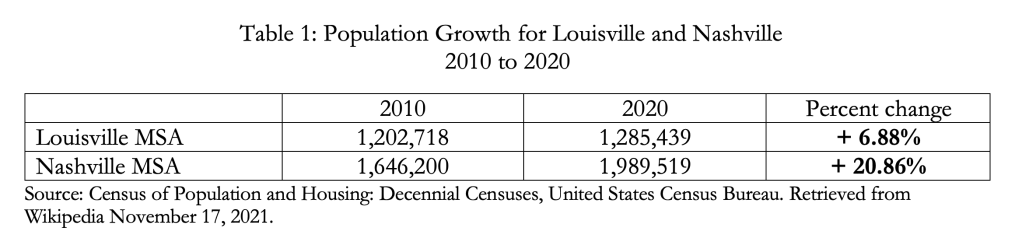
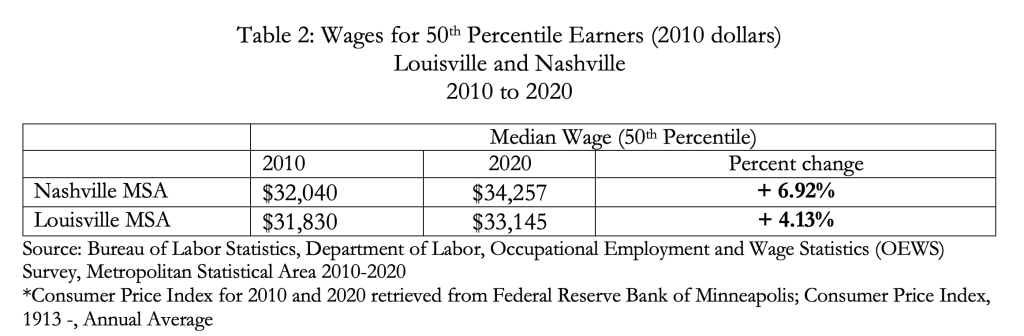
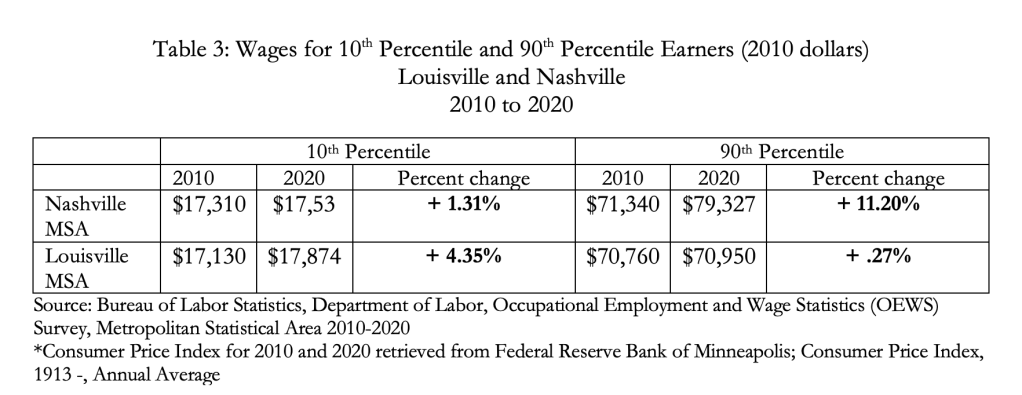

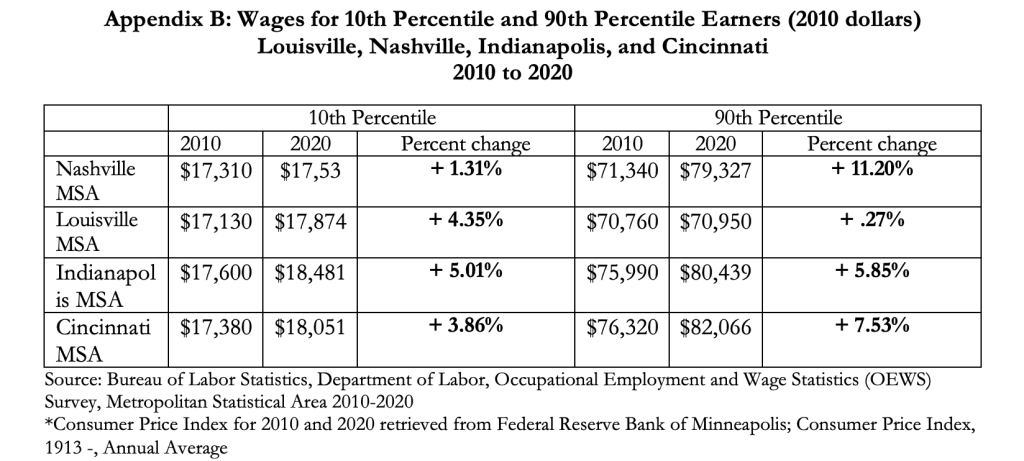

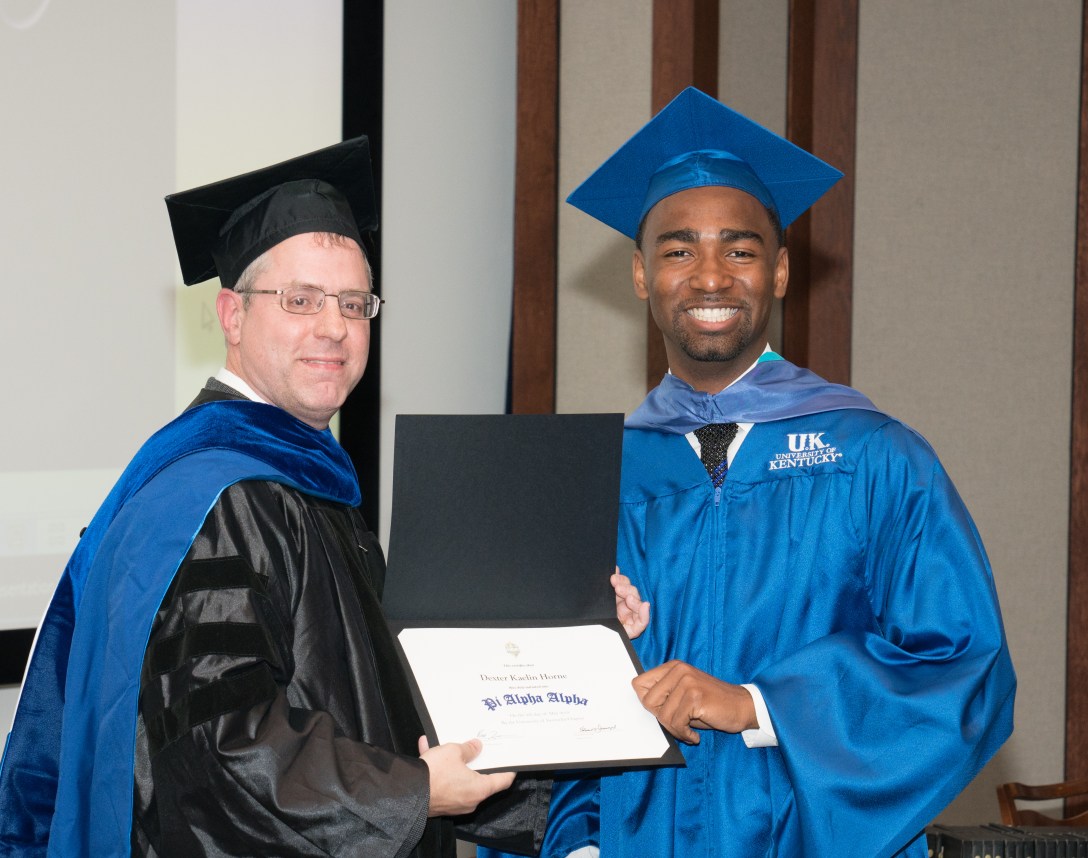


 PolitiFro