It’s been one year since I started this blog and first wrote my thoughts on Discontent. I created this space because I could feel myself breaking and I needed a place to scream. I also needed it to logically work through the concepts I was unlearning in my mind, and the demands raging in my heart, as the leaders in my orbit continually failed to meet the fervor for change swelling in our city. Thank you, readers, for screaming, unlearning, and demanding change with me. I’m working on more political thought pieces, as well as more lighthearted reflections on life, but I write slow and that work is ongoing.
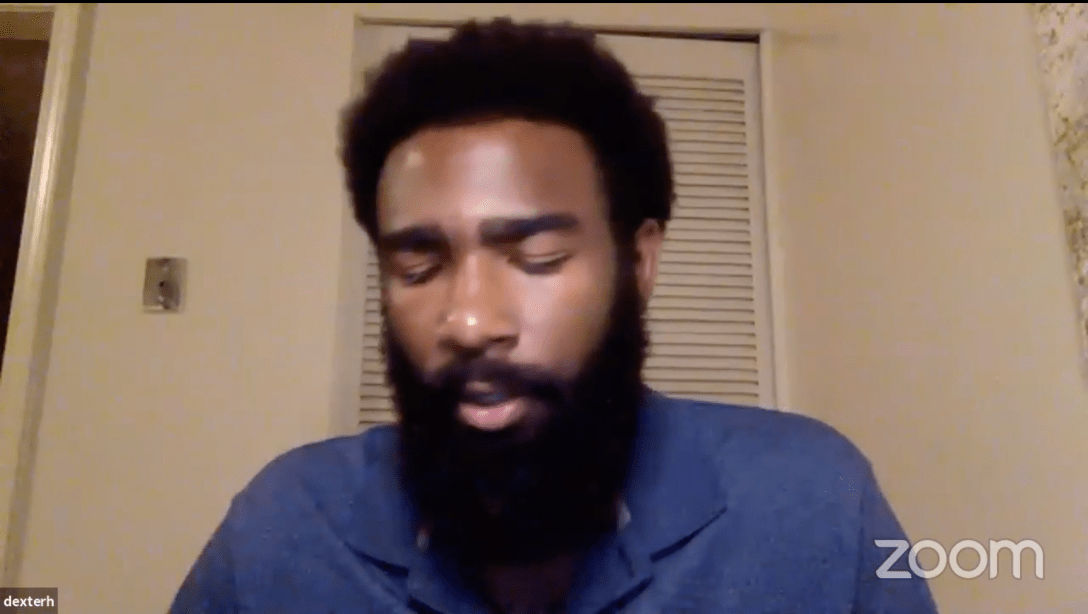
So on this one-year anniversary of Politifro, I’m going back into the eye of the storm to take a critical a look at what was going on in my mind during those most difficult days of protests in 2020, back when we thought we could move our leaders to pursue justice for Breonna Taylor, and before we found out that that justice would not come. The following essay I’m calling Witness because these words are notes that I took to prepare for a video interview I did for a group called Witness Louisville1 on July 9, 2020. You can find the full video recording here.2
I’m going to do a short reflection after the essay, discussing whether I feel differently about the things I said when pouring my heart out over a year ago. I want to ask myself what has changed since these words were spoken, both in the world and in me. I want to hear your thoughts about your personal transformation from the thick of 2020 to now, too. How do you feel about 2020s racial reckoning now that we’re over a year removed? How are you living differently in this world that is seemingly desperate to move on? Read and comment. Now to the essay.
2020 Witness Notes
I’ve been loath to do this because it goes against my instincts. Growing up, I avoided conversations around race with the same urgency that you see from a lot of uncomfortable white people right now. And that urgency, locked in me since almost the beginning of my memories illustrates that race has colored every inch of my lived experience with intricate strokes. I’ve never been blind to race, but fearing it and judging it and desperately trying to separate myself from it are all things that I have been guilty of.
It’s a difficult thing to articulate—my feelings toward when I was younger were mixed; part pride and connection to a community that I could see myself in, part all-consuming fear of being seen as a Black in the lily-white neighborhoods, schools, and social circles that I have grown up in and am still an active member of.
I was raised knowing what happens to Black people when they encounter the enforcers of our country’s racist laws, I understood that Black children were not thought of as equally intelligent and deserving of opportunity as white children, I understood that the default was to see my dark skin, thick hair, and round nose as ugly lest my body be fetishized for its athletic build—I understood these things and so much more. And it was because I understood these things that I needed the myth of a colorblind society to exist. I needed to believe that I could escape Blackness because I wanted to live. I wanted joy and intelligence and promise and opportunity. I wanted friendship, and love, and sex, and community. I wanted to be accepted and valued. I wanted to fall asleep knowing that my life mattered. And I’ve always worried that all of those things would be in jeopardy if my white peers saw me as too Black.
And so, I can’t point to a specific moment in which I first understood I was Black; the knowledge was always there, like a trusted friend whispering into my sub-conscious “remember Dexter, you’re not really safe here” whenever I found myself outside of my home, with the exception of family gatherings. And even with certain family, that voice would return to remind me not just of my Blackness, but the specific color of my Blackness. My skin is dark and I have that burden to bear, even around my own kind, too.
I can, however, say that my Blackness became more apparent and problematic for me the more I entered into majority-white spaces. In the beginning, I went to Chancey Elementary, a school that sits right of the end of Westport Road in the ex-urbs of the East End. But, maybe due to its close proximity to Ford’s Kentucky Truck Plant—where my father did and still does work—I was at an elementary school that I remember being fairly diverse. Today, the school might even be majority-minority; at any rate, my Blackness didn’t feel as noticeable during that period in my life. In those days, my friends were mostly (almost exclusively) Black like me and we were all in advanced classes, and none of us felt dumb or incompetent that I can remember. On the contrary, my white teachers went out of their way to tell me that I was brilliant. My fifth-grade teacher, Ms. Wilson, for example would pull me aside daily to tell me that I was exceptional and that she had a strong feeling that one day I would change the world. She would tell me that I was a deep thinker and problem solver, that I reminded her of a young Mahatma Gandhi or Martin Luther King. And I believed her. I believed that my best friends and I were smart and that we could do anything.
But then we went to middle school. We’d been accepted into the magnet program and were happy to join the school for “smart” kids, Barret Traditional Middle School. And I don’t want to minimize my time spent at Barret, I loved it there. I had some of my most formative experiences there. Sometimes I joke with people who’ve met me later in life that I “peaked” in middle school. But the reality is, is that I became a new person in middle school. I formed an identity there that would unlock new worlds for me. But I now know that the cost for that identity, for that shiny life, was heavy.
Barret was a majority-white school, but even the white kids there were different from the white kids that I had befriended in elementary school. These white kids weren’t from working class backgrounds, they were from upper-middle class and even upper-class families that built their homes in Jefferson County’s white flight zip codes. They all knew each other, their parents knew each other, they went to the same mega-churches even though some of the kids were Catholic (it was a social thing). Their social circles were at the top of this brand new class hierarchy—or at least, brand-new to me—and this prestige made them exceptionally gifted and I and my Black friends were no longer considered smart and exceptional too. For the first time, I felt racism’s implacable sting. And it presented itself in the form of an unspoken truth: “you, and the Black kids like you, are lucky to be here.” No one ever said that explicitly, but I always felt it. There was always that lingering thought in my mind, and I assume in the minds of the white kids too, that the kids of color at this school were fortunate to go here because if they didn’t, they’d have to go to school full of kids that looked like them. Those schools were the “bad” schools.
It was in this environment, with no social capital from my upbringing, that I began to see the power of being a token. I started thinking of my Blackness as something that I needed to hide as much as I could so that I could gain acceptance and be seen as important by the dominant culture. None of these words I knew at the time, not even token was a part of my vocabulary then, but I knew all the same what it took to be noticed. And I knew I wanted that. And so I went after it, starting at that point, in middle school and continuing through high school and college I studied the dominant culture and did what was necessary to meet its demands.
…the angry Black person who pointed out injustice was never going to get to make the graduation speech. That the Black person who fought against the racialized language of conservative thought…would never be voted to become the Homecoming King of a white, liberal arts college.
I was an athlete and somewhat handsome, plus I was a straight/cisgender/able-bodied male so my journey toward assimilation was considerably easier than what I imagine other marginalized groups face. I just had to talk sports with the white kids fetishizing Black bodies and share my love for rap music with kids titillated by Black culture, and keep my mouth shut when kids who knew nothing of Black pain or stigma used words around me like “nigga” and “ghetto.” I accepted and internalized ideas like “most Black people are lazy and that is why they are poor” and “some Black people cannot behave and that is why they are victims of violence” and “some Black people lack self-control and common sense, that is why they end up homeless or on drugs.” And I let myself become their model negro; thinking of myself in contrast to the other Black people who were either (a) of inferior character or (b) in need of white education. I allowed my face to be the poster-face of the post-racial society – my non-threatening, white sounding, clean, articulate, and athletic person became the case study of personal responsibility. Because they had me as an example, the white people around me could finally relax over the wealth gap, the health disparities, the neighborhood segregation, the disproportionate representation in prisons the everything that suggests that Black people are treated unfairly in society to their benefit. Because look at Dexter, if they would all just be like him…
And for being the token, the hardworking soldier for a post-racial society I won a lot, I mean A LOT, of awards.
By biting into the myth of a color-blind society, the dominant culture chose me to represent it whenever it needed to defend itself. I got chosen to make the speech at the MLK Jr. celebration in High School, to represent the school to potential students and parents, to speak at graduation, to go to the expensive liberal arts college, to be the Homecoming King, to be the Speaker of the House for student government. By the time I was as 18, my friendship with white families allowed me to take vacations with them to our country’s coastlines. I had stayed in fancy hotels and had expensive dinners. I had seen the ocean spread out in front of me and I felt a lump in my throat because it had never occurred to me that I should be able to see something so beautiful. My mother was in her 50s when she finally felt the sand beneath her feet; and she only saw it then because my sisters and I demanded we go as a family.
By the time I was 19, I had ridden my bicycle across the entire country; from RI to San Francisco, crossing mountains, valleys, rivers, desserts, and amber waves of grain. My roommate and best friend, a Peruvian-American man who had also grown up tokenized in a white, southern environment was by my side when we both saw California and the gold coast. We hugged each other and laughed inconsolably. Then he told me that his mother, who had escaped danger in Peru, had never even learned how to ride a bike. And we both cried. By the time I was 21, I was studying in London—one of the most expensive cities in the world. This is despite the fact that both my parents spent episodes of their youth living in government subsidized housing.
To do these and the other things that my ancestors could never dream of I accepted the myth of post-racial, and color-blind societies. I became the Black person who would bend over backwards time and time again, in order to make his white peers feel comfortable. Who failed to challenge racist, sexist, homophobic, transphobic and Islamophobic rhetoric and who even participated in these hateful diatribes at times. I did these things and others because I knew, from Middle School forward, that the angry Black person who pointed out injustice was never going to get to make the graduation speech. That the Black person who fought against the racialized language of conservative thought; the negative tropes that would lead someone to think that Black people were personally responsible for the country’s inequities, that that person would never be voted to become the Homecoming King of a white, liberal arts college. I knew from my East End, dominant culture upbringing, that to be American was to be white. And as a Black person, I was doomed from the start in that impossible task, but I tried anyway. I wanted joy and intelligence and promise and opportunity. I wanted friendship, and love, and sex, and community. I wanted to be accepted and valued. I wanted to fall asleep knowing that my life mattered. I wanted the things not guaranteed to Black people.
Once during a heated argument with a family member that family member yelled at me “if I put you in a room full of Black people, you wouldn’t know how to act.” And it ended the conversation. For once, I was speechless because their words had cut me to my core. I was in college at that point. I had many white friends and few Black ones…the opposite of how I started off in life. I was also considered successful, articulate, promising in the dominant culture at that stage of my life too. But my own family, immensely proud of me, was also disappointed in me. I wasn’t Black enough anymore, and I knew it.
I once had a girlfriend who reminded me of the fact often;“but you probably don’t even watch BET” she’d jab and I’d cringe quietly, with no good way to respond. My white friends would remind me too. “You talk white,” or my least favorite of all “you are the whitest Black person I know” they’d say, explaining to another white person why I was harmless. I never joined a Diversity Student Union in all my years of school, not because I didn’t want to, but because my race-obsessed post-racial mind was afraid that if I did so, I would again fall back into the “too Black category.” A white man over drinks once told me “the congressional black caucus is the most racist institution in America” I’m sure he thought the same of Diversity Student Unions. That same guy hated Colin Kaepernick, thought him “disrespectful and un-American.” He once told me I should go to law school, and that I would definitely get a scholarship if I did “because I was Black.” Another white man, someone I considered to be like a brother to me once complained to me on my birthday about how “it’s so stupid that everyone wants to get all butt-hurt about confederate statues. Now we got to tear them all down…people get upset about everything now and days.” That same friend once told me in high school that girls probably wanted to dance with me “because I was black” but then years later when I confessed out loud that one girl I was interested in may not have been interested in me because I was Black he became red faced and irate saying “bull shit, don’t do that! I hate when people try to make everything about race.”
In my effort to survive and thrive in systems of oppression I’ve definitely gained some privilege. As the classic Kanye line goes “we wasn’t supposed to make it past 25/joke’s on you we still alive” and I’m reminded of how lucky I am every time I get on the internet and watch another person with my skin taken from the world. But I also played this game of color-blind racism so closely that it has left me without a real identity. I’ve code switched so much that I have no idea who I am. I was 25 years old when I finally stepped outside on a sunny day and decided I would sit there, not in the shade, because I enjoyed the feeling of the sun so much. It took me more than a quarter of my life to let the sun touch my skin without fear. Growing up, I avoided the sun because I knew it would make my skin even darker than it was. I knew that the next Barret Middle School house party a picture would be taken with a weak flash and that everyone would laugh when Dexter wouldn’t show up in the picture. “You’re so dark!” they would say “all we can see is your teeth.” And I would have to laugh along too because I wanted friends. Because I wanted to be accepted, even if I had to sacrifice some of my self-respect.
I am — despite the whiteness of my talk, the politeness of my personality, the caution in my every step — an angry Black man. I am so angry, all of the time. And I am not your model negro.
That’s what racism has done to me, I think. It’s made me play a game I was never going to win. And, in trying to play this game, I’ve missed a million opportunities to challenge racism in my own life. I’m alive and I’m doing well, I’ve accomplished my parent’s goals for me, but I’ve also propped up white supremacy by allowing myself to be tokenized and I absolutely hate myself for that. I feel used, and dirty, disconnected. I feel like I’m still fighting for justice and equality, but from the inside of white institutions that accepted me as their token. And fighting from the inside is lonely, and you lose friends, and you lose power, and you lose hope a little more every day.
But I will keep doing it because deep down I’m angry too. I’m pissed that my parent’s felt like they had to go to the East End to put their kids through good schools, I’m pissed that at these good schools I always felt like I was “lucky to be there,” I’m angry at myself for ever accepting ideas of a post-racial society, I’m pissed at the memory of every microaggression I let slide because I needed to keep my friends and be seen as calm and articulate, I’m mad that Breonna Taylor was murdered because of her skin color and her zip code. I’m mad that our white leaders in Louisville feel that it is too extreme a reaction to arrest the cops who murdered Breonna, regardless of rules and precedent—as if her murder at the hands of our city wasn’t extreme unruly to begin with. I’m mad that so many of my white peers have been silent – that they are at the beach or lake or some taco restaurant during a viral pandemic calling my people rioters and wishing things would go back to normal so that they can be comfortable again. I’m mad at white evangelical Christians, for providing lip service to the bible every Sunday and then flocking back to white neighborhoods to do nothing about the racial inequality that keeps them rich. I am — despite the whiteness of my talk, the politeness of my personality, the caution in my every step — an angry Black man. I am so angry, all of the time. And I am not your model negro.
I ask two things of white people. First, for the white people who genuinely care about others, and who want to find ways to make America anti-racist: I ask that you study the radical laws and police practices of our country’s past 244 years that have made life for Black people hell. I think that if you do this, it will help you understand why we scream “universal healthcare,” “cancel the rent” and “defund the police.” If you can understand how radical racist public policy was in the past that created the situations we are fighting through now, it will help you understand why it will take radical anti-racist policies in the present, NOT moderation, NOT reform in the present for us to correct the mistakes of the past. And stop voting for conservative politicians (Democrat or Republicans) who are not interested in radical change, but who are instead interested in maintaining or barely tweaking the status quo. That is not good enough.
Second, for the white friends of my life who have not been good allies in the past and who continue to pretend like you are a color-blind, good person, I ask that you leave me alone. I will forgive you for any racist thing you’ve ever done, but I no longer have the energy to engage in nonreciprocal relationships with people who will not do the work to understand Black pain, and who refuse to acknowledge their privilege in society. No matter what we’ve experienced together in the past, you do not own my spirit and I do not OWE you my friendship. It’s mine to give and I will not share with anyone who is not trying to be anti-racist for now on. That is all. Thank you for hearing my story.
2021 Reaction
I appreciate my Witness experience because it gave me a chance to be publicly angry and to write from a place of anger. Anger is not an emotion that I usually allow myself to embrace. The me that wrote the words above is not my favorite version of me, yet this man exists too, and this interview gave him the chance he needed to cry and speak his truth.
Witness is still part of my truth, one I’ve been reminded of recently as I listened through Eleanor Klibanoff’s haunting investigation into LMPD and the conditions that led to Breonna Taylor’s and David McAtee’s deaths two summers ago. And again as I’ve started to read The Courier Journal’s Magnetic Pull series, which has allowed me to relive my experience as a “traditional program” student, in a school that I “was lucky” to be in.
Still, with time between me then and me now, it’s hard to not be a little critical of myself. In telling my Witness story, I didn’t highlight enough how much class privilege saved me from the worst of white supremacy. My two-parent, mostly middle class, nuclear family raised me in neighborhoods where I never heard gunshots, where I had clean air and water, and where grocery stores were a stone’s throw away. More than feeling like an outsider for my skin color, it’s the inequity that made my family’s move to the other, whiter side of town beneficial to me that I am most angry about. The impact of white supremacy on Black people who don’t assimilate, and who don’t have the resources to push their kids into selective schools, is much harsher. Many would choose the microaggressions of my childhood over a childhood reared in the schools and neighborhoods that most Louisvillians consider to be “bad.” I acknowledge my privilege.
Of course, I was asked to tell my story so that’s the one I told. And as I tried to address in my Witness notes, it’s the same microaggressions that I experienced in white spaces that are used to prop up an ideology that rationalizes inequity and demonizes the have-nots in non-white spaces. It’s all related, all component parts of a painful American experience, and all worthy of addressing.
Looking back I also see how essential it was to focus on a particular Black experience at that time: the experience of African Decedents of Slaves. The pain of systemic racism in our criminal justice system, schools, neighborhoods, and workplaces that we faced in 2020 was tightly tangled in our nation’s history with Black slavery and servitude. We were, as my friend Leah Kelly once described to me, addressing the truth and needs of those “nearest to the harm.” Now removed from that summer, I can’t help but wonder how the Witness story would be told from the perspective of a person who is Black and trans, or a Black refugee, or a non-Black person like Asian American or Pacific Islanders who have their own struggles in the American caste system. Our nation’s equity needs are vast and intersectional, and we seem to only address them one social movement at a time.
Lastly, white people. I read these words I wrote during a season of intense pain and anger and realize that many of my friends would be hurt to know I feel this way about my childhood experiences. The truth is painful, that’s why we avoid it, but it is still my truth. My hope though, is to square these realities with the pure joy that also came in abundance while I was young and in the company of imperfect people. I am older and still in the company of imperfect people, and I would amend my second request to the white friends of my life who have not been good allies in the past and who continue to pretend like they are color-blind, good people. My revised request is more graceful: cut the shit, dignify my humanity, and try to improve. That’s all I can promise you, and that’s all I really want out of my peers in return.
Thank you, reader, for your time.
- Witness Louisville is a Facebook Group created to hold space for members of the Louisville community to provide unedited and uninterrupted stories of racism and Black life, and to allow other Louisvillians to listen to those stories. I want to give a huge thank you to Marta Miranda-Straub, Melissa Johnson, Brian Buford, and Shannon Cambron for facilitating this conversation, and bearing witness. Thank you Lacey McNary for inviting me to speak. Lastly, I want to express endless gratitude to Keturah Herron and Judge Derwin Webb who were also vulnerable that day and for teaching me so much in the process. You can find their stories, and more, on the Witness Louisville Facebook page: https://www.facebook.com/groups/3265291003515656/
Note: the views and opinions expressed on PolitiFro are those of myself only and do not necessarily reflect the position or views of my employer or any entity with which I am associated. Welcome to my mind and beware: it changes.
Like something you’ve read here? Sponsor the early morning coffees or late night beer that help make this blog possible. This is in no way necessary, but will make me feel good! Donate $5, $10, or any amount on Venmo: @Dexter-Horne or through CashApp: $DexterHorne. And as always, thanks for reading.

 PolitiFro